
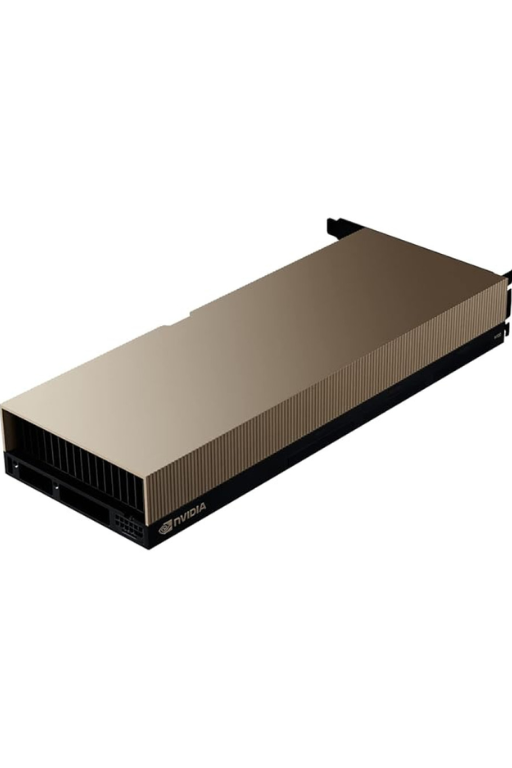
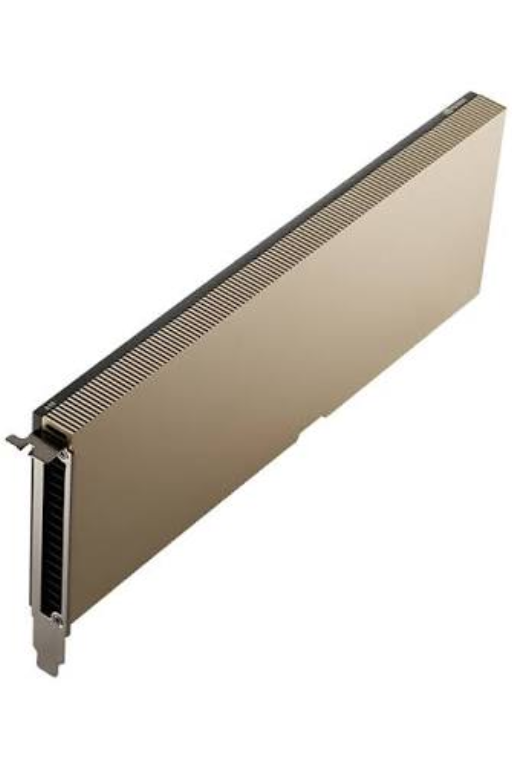

NVIDIA A16 64GB GDDR6 ECC PCIe GPU
The NVIDIA A16 GPU is a high-density enterprise accelerator designed primarily for virtual desktop infrastructure (VDI), virtual workstations, remote desktops, cloud graphics, video streaming, and knowledge-worker applications. Based on the NVIDIA Ampere architecture, the A16 combines four independent GPUs on a single dual-slot PCIe board, each equipped with 16GB of GDDR6 ECC memory, providing 64GB of total GPU memory.
With 4 × 200GB/s memory bandwidth, PCIe Gen4 x16 connectivity, passive cooling, and a 250W maximum power consumption, the NVIDIA A16 is optimized for high user density and efficient GPU virtualization in enterprise data centers.
Description
The NVIDIA A16 PCIe GPU Accelerator is purpose-built for organizations requiring high-density GPU virtualization rather than a single large monolithic GPU. Its unique architecture integrates four NVIDIA Ampere GPUs on one physical PCIe card, with each GPU providing 16GB of GDDR6 ECC memory. The resulting 64GB total memory capacity allows the board to support multiple simultaneous virtual GPU workloads across a large number of users.
The A16 is particularly well suited to NVIDIA Virtual PC (vPC), NVIDIA Virtual Applications (vApps), NVIDIA RTX Virtual Workstation (vWS), and NVIDIA Virtual Compute Server (vCS) environments. NVIDIA positions the A16 for office productivity, multimedia-rich virtual desktops, streaming video, teleconferencing, and remote-access applications where user density and cost efficiency are important.
Each of the four GPUs has its own 16GB GDDR6 ECC memory subsystem and provides up to 200GB/s of memory bandwidth, resulting in four independent 16GB/200GB/s GPU resources rather than one unified 64GB GPU memory pool. This distinction is important when planning virtualization or application deployments.
The A16 uses PCI Express Gen4 x16 for host connectivity and features a full-height, full-length (FHFL), dual-slot form factor. Its passive thermal design requires installation in a properly engineered server chassis with sufficient directed airflow. The maximum board power is 250W, making it suitable for dense multi-GPU server configurations.
For multimedia workloads, the board includes four NVENC encoders and eight NVDEC decoders, with NVDEC supporting AV1 decoding. This makes the A16 particularly useful for large-scale virtual desktop deployments involving video playback, conferencing, streaming, and graphics-rich remote sessions.
The A16 also supports SR-IOV, allowing virtualization software to expose virtual functions for GPU virtualization environments. NVIDIA’s product documentation specifies support for 16 virtual functions per GPU.
3. Complete Technical Specification
| Specification | NVIDIA A16 |
|---|---|
| Product Family | NVIDIA A16 GPU |
| Architecture | NVIDIA Ampere |
| GPUs per Board | 4 × Ampere GPUs |
| Total GPU Memory | 64GB |
| Memory Configuration | 4 × 16GB GDDR6 ECC |
| Memory Type | GDDR6 |
| Memory Bandwidth | 4 × 200GB/s |
| Memory Bus | 128-bit per GPU |
| Host Interface | PCI Express |
| PCIe Generation | PCIe Gen4 |
| PCIe Interface | x16 |
| Form Factor | Dual-slot |
| Physical Format | Full-Height, Full-Length (FHFL) |
| Cooling | Passive |
| Maximum Power Consumption | 250W |
| Power Connector | 8-pin CPU power connector |
| NVENC | 4 × |
| NVDEC | 8 × |
| AV1 Decode | Supported |
| ECC Memory | Yes |
| SR-IOV | Supported |
| Virtual Functions | Up to 16 per GPU |
| vGPU Support | NVIDIA vPC, vApps, RTX vWS, vCS |
| NVIDIA AI Enterprise | Supported |
| vGPU Profiles | 1GB, 2GB, 4GB, 8GB, 16GB |
| Thermal Design | Passive server cooling |
| Secure / Measured Boot | Supported, optional hardware Root of Trust |
| NEBS | Level 3 ready |
| Primary Design Purpose | GPU virtualization and VDI |
| Target Environment | Enterprise data centers / servers |
NVIDIA’s current virtualization documentation identifies the A16 as a four-GPU Ampere board with 64GB total GDDR6 memory, a 250W passive design, and PCIe Gen4 dual-slot FHFL form factor.
Important Memory Architecture Note
The advertised 64GB is not a single 64GB memory pool. It consists of:
4 × 16GB GDDR6 ECC = 64GB total
Each GPU independently accesses its own 16GB memory subsystem with up to 200GB/s bandwidth. This is especially important when determining application and vGPU compatibility.
4. Applications
Virtual Desktop Infrastructure (VDI)
- Enterprise virtual desktops
- Knowledge-worker desktops
- Remote office environments
- Cloud-hosted desktops
- Windows virtual desktop deployments
- High-density user environments
Virtual Applications
- Microsoft Office applications
- Web browsers
- Multimedia applications
- PDF and document applications
- Remote productivity applications
- Video conferencing
- Streaming video
Virtual Workstations
- Lightweight professional graphics
- 2D design
- CAD viewing
- Remote engineering desktops
- Graphics-rich applications
- Remote workstation access
Media & Video
- Video streaming
- Remote video playback
- Teleconferencing
- Multimedia processing
- GPU-accelerated video decoding
- AV1 video decoding
Enterprise Cloud
- GPU-enabled cloud desktops
- Multi-tenant virtualization
- Desktop-as-a-Service (DaaS)
- Hosted applications
- Enterprise GPU resource consolidation
NVIDIA currently positions the A16 primarily for high-density vPC and virtual desktop deployments, particularly environments serving large numbers of task and knowledge workers.
5. Compatibility
The NVIDIA A16 is designed for enterprise server platforms supporting PCIe Gen4 x16 GPU accelerators.
Platform Requirements
- PCIe Gen4 x16-capable server
- Full-height, full-length expansion slot
- Two-slot physical clearance
- 250W-capable server power infrastructure
- 8-pin CPU-style GPU power connection
- Adequate directed airflow for passive cooling
- NVIDIA-supported virtualization software
- Compatible NVIDIA vGPU software stack
- Server BIOS/platform configuration supporting the accelerator
Supported NVIDIA Virtualization Technologies
- NVIDIA Virtual PC (vPC)
- NVIDIA Virtual Applications (vApps)
- NVIDIA RTX Virtual Workstation (vWS)
- NVIDIA Virtual Compute Server (vCS)
- NVIDIA AI Enterprise
The A16 is not equivalent to a conventional single-GPU graphics card. Its four-GPU architecture is specifically intended for high-density virtualization and should be deployed in a server platform designed to accommodate its passive cooling requirements.
6. Key Benefits
Four GPUs on One PCIe Card
The A16 integrates four Ampere GPUs into a single dual-slot board, allowing significantly higher GPU density than deploying four separate dual-slot cards.
64GB Total GDDR6 ECC Memory
The board provides 4 × 16GB GDDR6 ECC, giving each GPU dedicated memory for virtualized workloads.
High User Density
Its architecture is optimized for serving large numbers of virtual desktop users from a relatively small number of physical servers.
4 × 200GB/s Memory Bandwidth
Each GPU provides up to 200GB/s of memory bandwidth, supporting responsive graphics and multimedia workloads.
PCIe Gen4 x16
High-speed PCIe Gen4 connectivity provides a modern host interface for enterprise server platforms.
Strong Multimedia Capability
With 4 NVENC encoders and 8 NVDEC decoders, including AV1 decoding, the A16 is well suited to multimedia-rich virtual desktops and video-heavy remote-work environments.
Passive Data-Center Design
The passive heatsink design is optimized for controlled server airflow and high-density data-center deployments.
Enterprise Virtualization Support
Broad NVIDIA vGPU software support enables deployment across vPC, vApps, RTX vWS, and vCS environments.
Efficient 250W Board Power
A 250W maximum power envelope enables four-GPU acceleration on a single PCIe board without requiring the power budget of four separate accelerator cards.
7. SEO Title
NVIDIA A16 64GB GDDR6 ECC GPU | 4-GPU PCIe Gen4 Accelerator for VDI & Virtualization
Related products
-
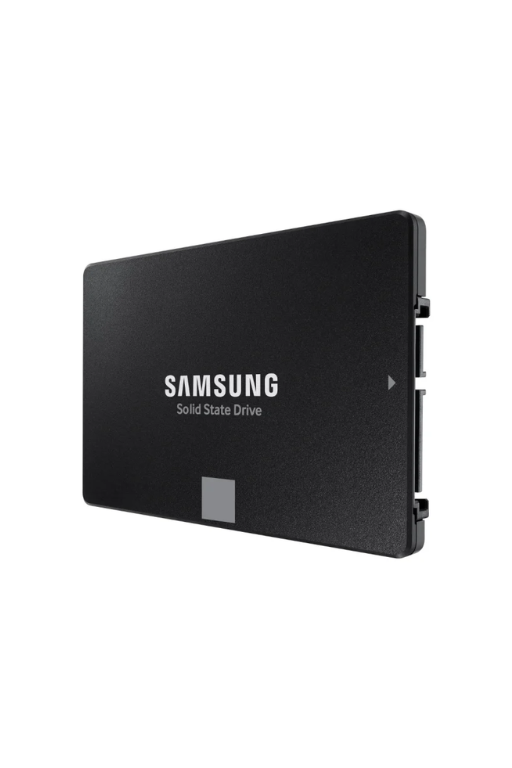
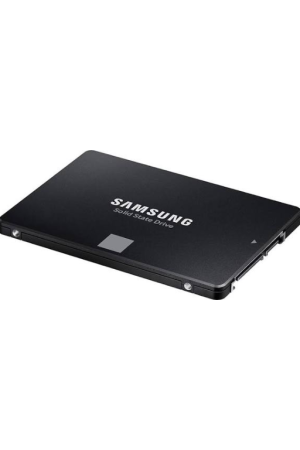
Samsung-4TB Enterprise SSD
Read more
The Samsung 4TB Enterprise SSD is a high-capacity solid-state storage solution designed for enterprise servers, data centers, workstations, virtualization, and demanding business applications. With 4TB of storage capacity, it provides fast data access, low latency, and reliable performance for large-scale storage workloads.
Quick View -
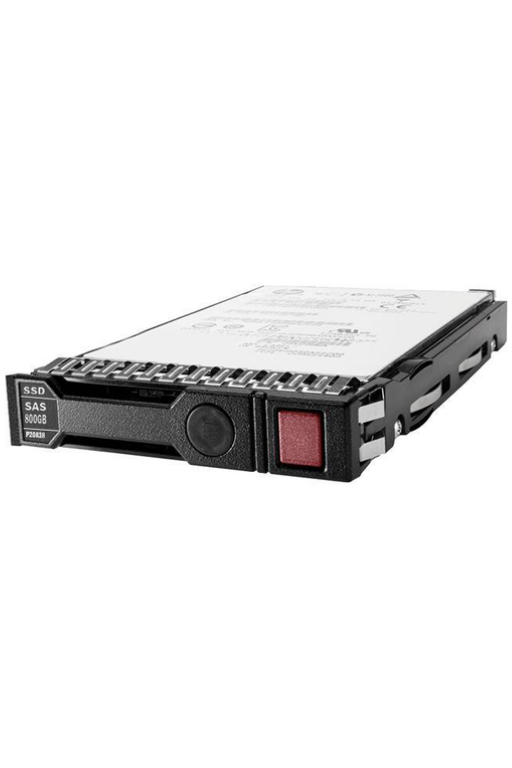
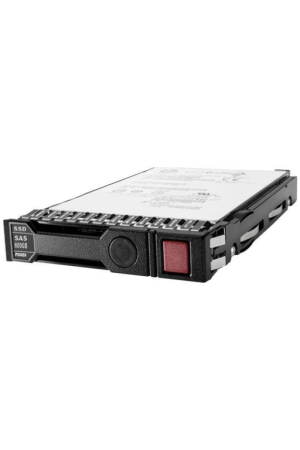
HP P20838-001
Read more
The HP P20838-001 is a 5-pack of 800GB 2.5-inch SAS 12Gb/s Mixed-Use Dual-Port Solid State Drives (SSDs) designed for compatible HP Enterprise Gen8–Gen10 servers and storage platforms. It provides high-speed enterprise storage, reliable dual-port connectivity, and balanced performance for virtualization, databases, and demanding business applications.
Quick View -
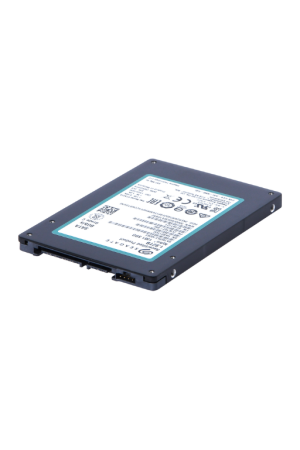
Seagate-1.92TB Enterprise SSD
Read more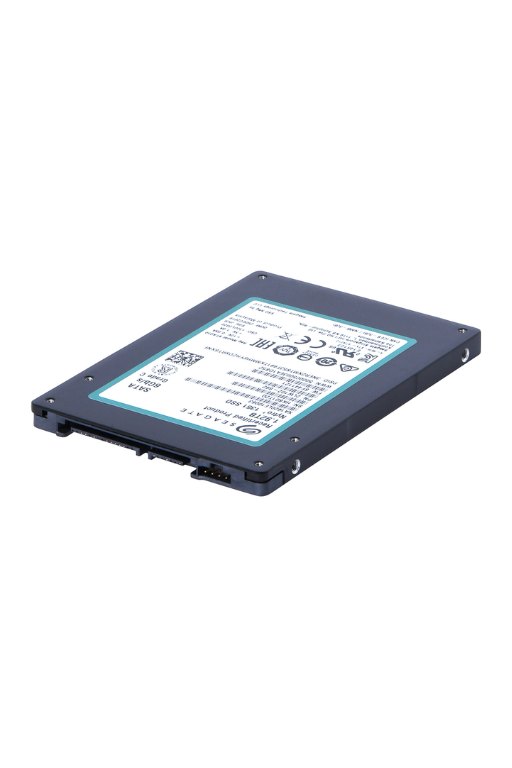
The Seagate 1.92TB Enterprise SSD is a high-capacity solid-state storage solution designed for enterprise servers, data centers, virtualization platforms, databases, and professional workloads. It provides fast data access, low latency, high endurance, and reliable performance for demanding 24/7 storage environments.
Quick View -
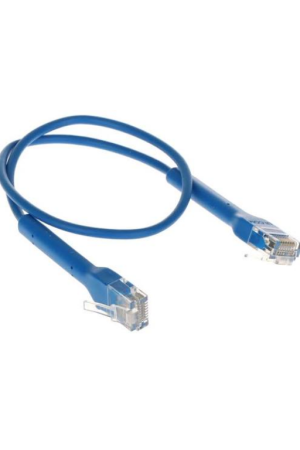
0.3m Patch Cord
$ 0.42 Price excluding tax Add to cart $ 0.42 Price excluding tax
The 0.3m Patch Cord is a compact network cable designed for short-distance connections between network switches, patch panels, servers, routers, and other Ethernet equipment. Its short length helps maintain organized and clutter-free installations in server rooms, data centers, and network cabinets.
Quick View
