
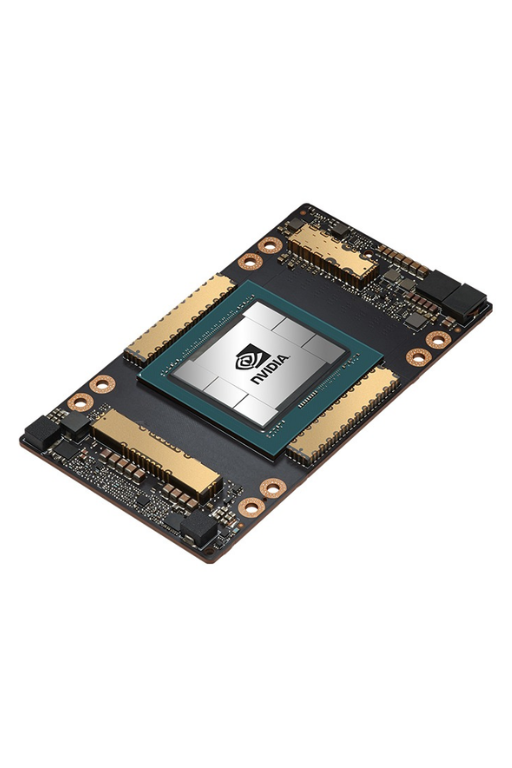

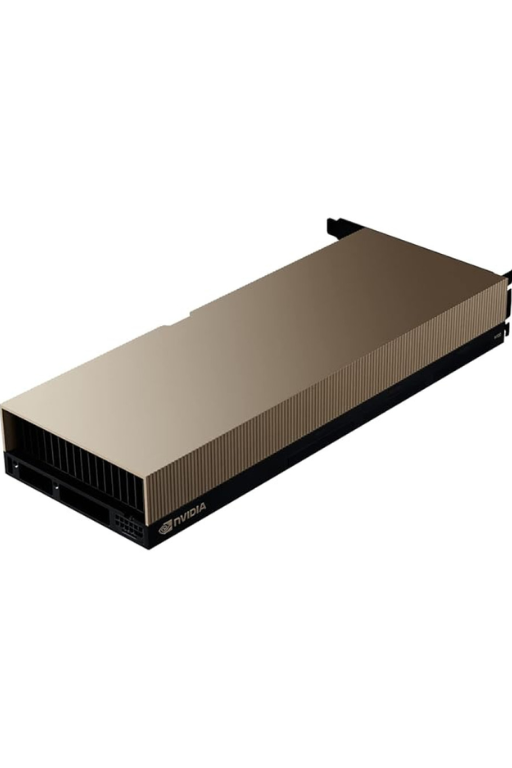
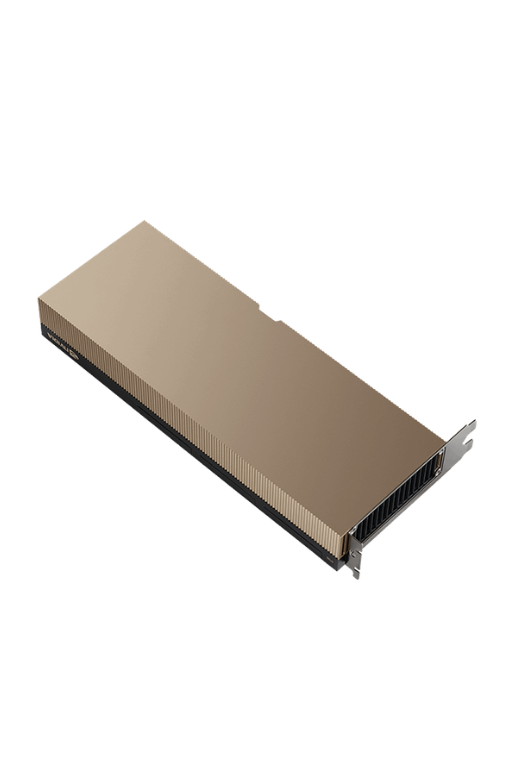
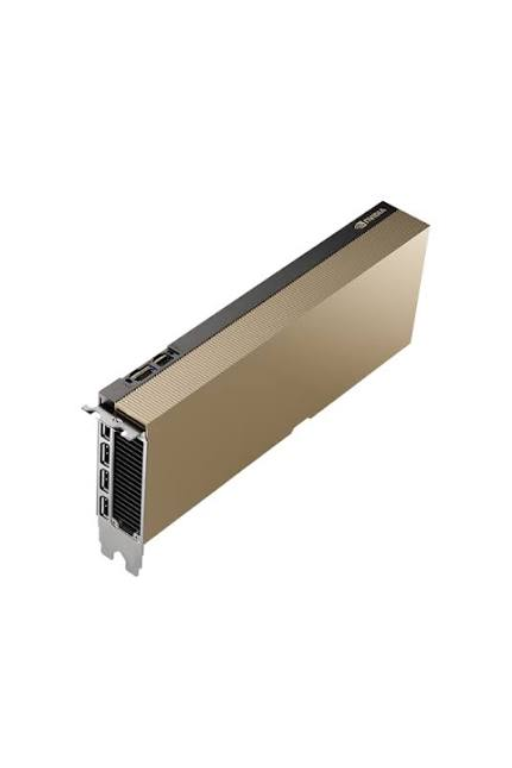
NVIDIA A30 Tensor Core GPU 24GB
The NVIDIA A30 Tensor Core GPU is a professional data-center accelerator based on the NVIDIA Ampere architecture, engineered for AI inference, machine learning, enterprise computing, deep-learning training, high-performance computing (HPC), and data analytics.
Featuring 24GB of HBM2 memory, 933GB/s memory bandwidth, third-generation Tensor Cores, FP64 Tensor Core acceleration, PCIe Gen4 connectivity, and NVIDIA Multi-Instance GPU (MIG) technology, the A30 delivers a flexible combination of compute performance, memory bandwidth, virtualization, and energy efficiency.
With a 165W maximum TDP and a dual-slot full-height, full-length PCIe form factor, the A30 is designed for mainstream enterprise servers and NVIDIA-Certified Systems.
Description
The NVIDIA A30 Tensor Core GPU is a versatile enterprise accelerator designed to provide high-performance GPU computing across a broad range of workloads without requiring the power envelope of larger A100-class accelerators.
Built on the NVIDIA Ampere architecture, the A30 combines third-generation Tensor Cores with dedicated FP64 Tensor Core capabilities. This allows a single accelerator to support AI inference, AI training, scientific computing, analytics, and traditional HPC workloads. NVIDIA specifically positions the A30 for mainstream enterprise servers where performance, flexibility, and power efficiency are important.
The GPU incorporates 24GB of HBM2 memory connected through a high-bandwidth memory subsystem capable of delivering 933GB/s of memory bandwidth. This high memory bandwidth is particularly valuable for AI, scientific simulation, data analytics, and other workloads that repeatedly move large datasets between GPU compute resources and memory.
For AI workloads, the A30 provides TF32, FP16, BFLOAT16, INT8, and INT4 Tensor Core acceleration. NVIDIA rates the GPU at up to 82 TFLOPS TF32 Tensor Core performance, 165 TFLOPS FP16/BFLOAT16 Tensor Core performance, 330 TOPS INT8, and 661 TOPS INT4, with the higher figures representing supported structured-sparsity operation.
The A30 also supports FP64 Tensor Core acceleration, delivering up to 10.3 TFLOPS FP64 Tensor Core performance and 5.2 TFLOPS peak FP64 performance, making it suitable for scientific and engineering applications requiring double-precision computation.
One of the A30’s major enterprise features is NVIDIA Multi-Instance GPU (MIG). A single A30 can be configured as one 24GB instance, two 12GB instances, or up to four 6GB instances. This allows multiple workloads to run simultaneously with hardware-level partitioning and predictable resource allocation.
For multi-GPU environments, the A30 supports PCIe Gen4 with up to 64GB/s bandwidth and third-generation NVIDIA NVLink with up to 200GB/s, using an NVLink Bridge to connect compatible pairs of A30 GPUs.
The A30 is designed as a passively cooled, dual-slot, full-height, full-length PCIe accelerator. Its maximum board power is only 165W, making it significantly more power-conscious than larger high-end data-center accelerators while retaining substantial HBM2 bandwidth and Tensor Core capability. The passive design requires adequate server airflow.
3. Complete Technical Specification
Specification NVIDIA A30 Tensor Core GPU
Product Family NVIDIA A30 Tensor Core GPU
Architecture NVIDIA Ampere
GPU Class Data-center / Enterprise Accelerator
GPU Memory 24GB HBM2
Memory Bandwidth 933GB/s
Peak FP64 5.2 TFLOPS
FP64 Tensor Core 10.3 TFLOPS
Peak FP32 10.3 TFLOPS
TF32 Tensor Core 82 TFLOPS
TF32 with Sparsity 165 TFLOPS
BFLOAT16 Tensor Core 165 TFLOPS
BFLOAT16 with Sparsity 330 TFLOPS
FP16 Tensor Core 165 TFLOPS
FP16 with Sparsity 330 TFLOPS
INT8 Tensor Core 330 TOPS
INT8 with Sparsity 661 TOPS
INT4 Tensor Core 661 TOPS
INT4 with Sparsity 1,321 TOPS
MIG Support Yes
Maximum MIG Instances 4
MIG Profiles 4 × 6GB, 2 × 12GB, or 1 × 24GB
Host Interface PCI Express
PCIe Generation PCIe Gen4
PCIe Bandwidth Up to 64GB/s
GPU Interconnect 3rd Generation NVIDIA NVLink
NVLink Bandwidth Up to 200GB/s
NVLink Configuration Up to 2 GPUs via NVLink Bridge
Form Factor Dual-slot, Full-Height, Full-Length (FHFL)
Cooling Passive
Maximum TDP 165W
Media Engines 1 Optical Flow Accelerator, 1 JPEG Decoder, 4 NVDEC
Virtual GPU Support NVIDIA AI Enterprise, NVIDIA Virtual Compute Server
Target Platform Enterprise/Data-Center Servers
Architecture Generation Ampere
ECC Memory Yes
Primary Workloads AI, ML, inference, HPC, analytics, enterprise compute
*Performance figures marked with sparsity are NVIDIA’s published sparse-operation figures and depend on supported workloads. *
4. Applications
The NVIDIA A30 is suitable for a wide range of professional and enterprise workloads:
Artificial Intelligence & Machine Learning
AI model inference
Deep-learning inference
AI training
Conversational AI
Natural language processing
Computer vision
Recommendation systems
Image recognition
Predictive analytics
Generative AI workloads
High-Performance Computing
Scientific research
Engineering simulations
Computational fluid dynamics
Molecular dynamics
Seismic analysis
Weather and climate modeling
Financial modeling
Double-precision HPC
Enterprise Computing
Data analytics
Accelerated databases
Enterprise AI
Cloud computing
Virtualized GPU infrastructure
VDI
Multi-tenant GPU services
Research and development environments
Media & Data Processing
GPU-accelerated video processing
JPEG processing
Video decoding
AI-assisted media analytics
Computer vision pipelines
5. Compatibility
The NVIDIA A30 is designed for enterprise and data-center servers with compatible PCIe Gen4 expansion slots.
Platform Requirements
PCIe-compatible server motherboard
PCIe Gen4 x16-class slot recommended
Dual-slot physical clearance
Full-height, full-length server chassis support
Adequate airflow for passive GPU cooling
Server power system capable of supporting a 165W accelerator
Compatible NVIDIA driver and software environment
Qualified server BIOS and platform configuration
NVIDIA offers A30 support through NVIDIA-Certified Systems and partner server platforms. The A30 can also be deployed in multi-GPU configurations using PCIe and supported NVLink Bridge configurations.
Important: The A30 is a passively cooled data-center GPU, not a consumer desktop graphics card. Installation should be performed in a server chassis capable of providing the airflow required by the accelerator.
6. Key Benefits
24GB HBM2 Memory
Provides a substantial high-bandwidth memory pool for AI, HPC, analytics, and data-intensive applications.
933GB/s Memory Bandwidth
High memory throughput helps accelerate workloads that depend heavily on rapid access to large datasets.
Ampere Tensor Core Architecture
Third-generation Tensor Cores provide acceleration for modern AI workloads across TF32, FP16, BFLOAT16, INT8, and INT4 precision modes.
FP64 Tensor Core Performance
The A30 supports dedicated FP64 Tensor Core acceleration, making it suitable for scientific and engineering workloads requiring double-precision calculations.
NVIDIA MIG
Partition one physical A30 into multiple isolated GPU instances, allowing different workloads or users to share the accelerator efficiently. Up to four 6GB instances are supported.
Low 165W Power Envelope
The 165W maximum TDP provides a strong balance between compute performance and power consumption for mainstream enterprise servers.
PCIe Gen4
High-speed PCIe Gen4 connectivity provides up to 64GB/s of host interface bandwidth.
NVLink Connectivity
Supported A30 cards can use third-generation NVLink Bridge technology for high-speed GPU-to-GPU communication, with up to 200GB/s of NVLink bandwidth.
Enterprise Virtualization
Support for NVIDIA AI Enterprise and NVIDIA Virtual Compute Server enables deployment in virtualized enterprise and cloud environments.
7. SEO Title
NVIDIA A30 Tensor Core GPU 24GB HBM2 | PCIe Gen4 AI, HPC & Data Center Accelerator
Related products
-
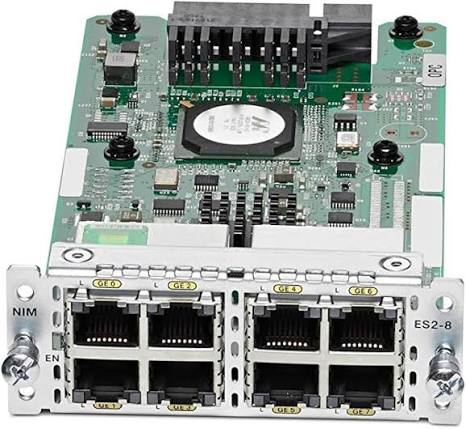
Cisco NIM-ES2-8 8-Port Layer 2 Gigabit Ethernet Switch Module
Read more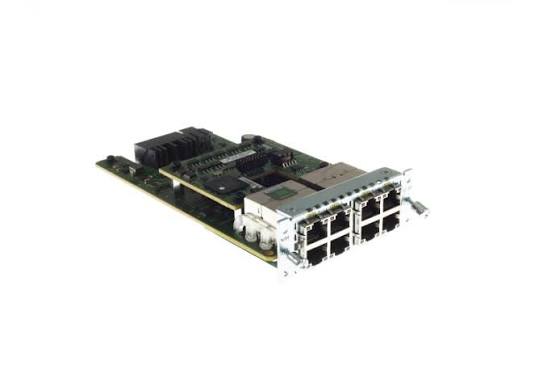
Cisco NIM-ES2-8 8-Port Layer 2 Gigabit Ethernet Switch Module
The Cisco NIM-ES2-8 is an 8-port Layer 2 Gigabit Ethernet Network Interface Module designed for compatible Cisco Integrated Services Routers. It provides eight 10/100/1000 Mbps Ethernet switch ports in a single-wide NIM form factor, enabling organizations to expand LAN connectivity directly within the router while supporting VLAN-based switching and enterprise branch-office networking.
Quick View -

Arista Compatible 40G QSFP+ to 10G SFP+ Adapter Converter Module
Read more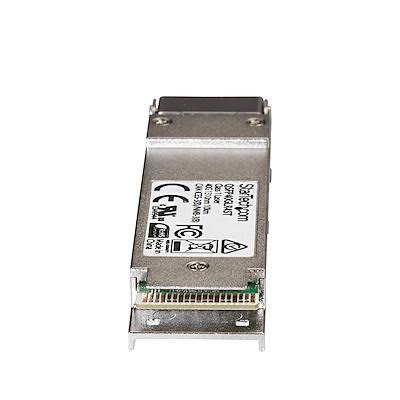
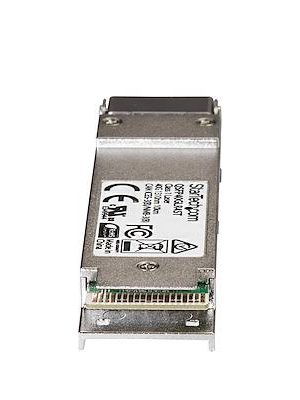
Arista Compatible 40G QSFP+ to 10G SFP+ Adapter Converter Module
The Arista QSFP-SFP10G adapter is a converter module designed to provide 10 Gigabit Ethernet and 1 Gigabit Ethernet connectivity through 40G QSFP+ ports. It enables compatible Arista QSFP-only platforms to use lower-speed SFP/SFP+ modules, providing a practical and cost-effective solution for network migration, connectivity expansion, and mixed-speed Ethernet environments.
Quick View -


Epson BrightLink 1485Fi 1080p 3LCD Interactive Laser Display
Read more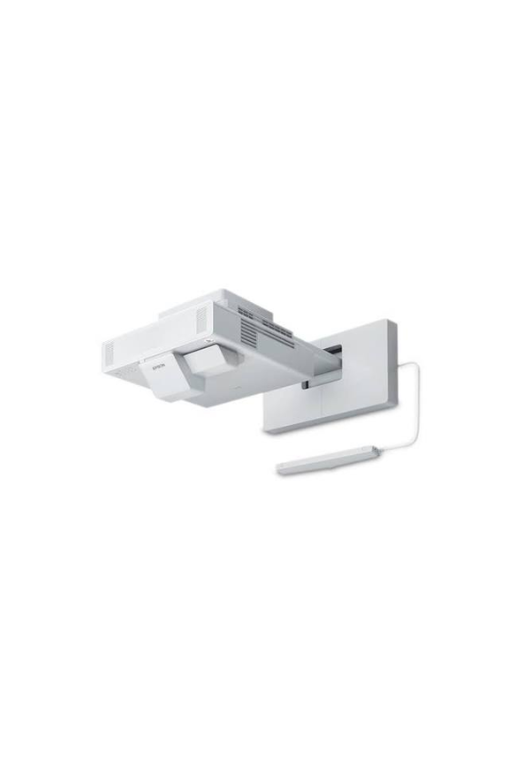
Epson BrightLink 1485Fi 1080p 3LCD Interactive Laser Display is a high-brightness ultra-short-throw interactive display designed for classrooms, meeting rooms, training environments, and collaborative workspaces. With 5,000 lumens of color and white brightness, Full HD 1080p display capability, a virtually maintenance-free laser light source, and intuitive pen-and-touch interactivity, it delivers a large, engaging workspace for presentations, teaching, and collaboration.
Quick View -


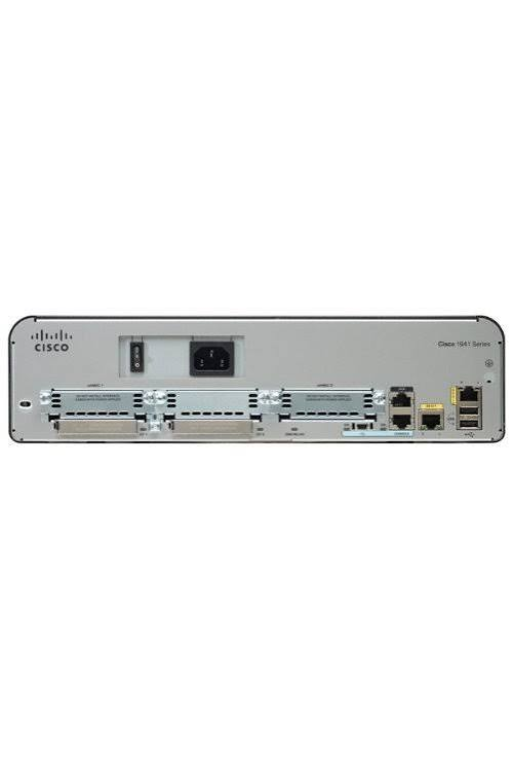
Cisco CISCO1941/K9 1941 Integrated Services Router
Read more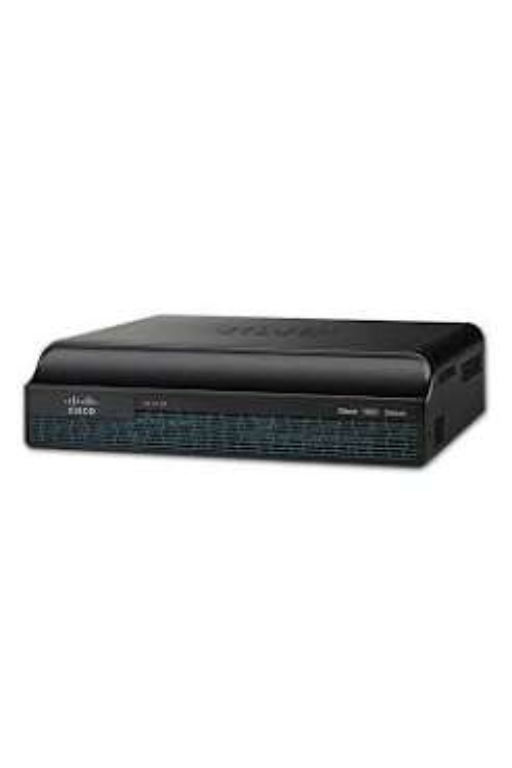
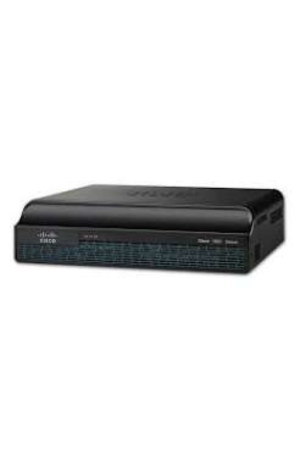
Cisco CISCO1941/K9 1941 Integrated Services Router is a modular enterprise router designed for secure and reliable branch-office and small-business networking. It features 2 Gigabit Ethernet interfaces, 2 EHWIC expansion slots, 256 MB CompactFlash storage, 512 MB DRAM, and IP Base software, providing flexible connectivity and expansion for professional network deployments.
Quick View
