
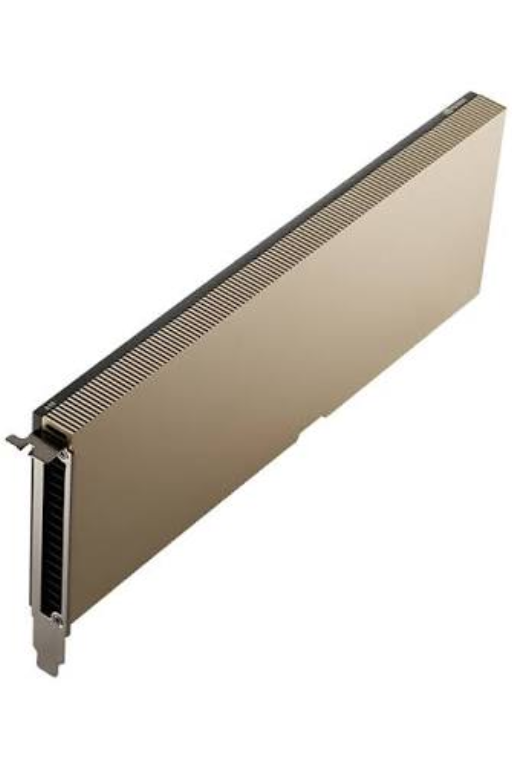
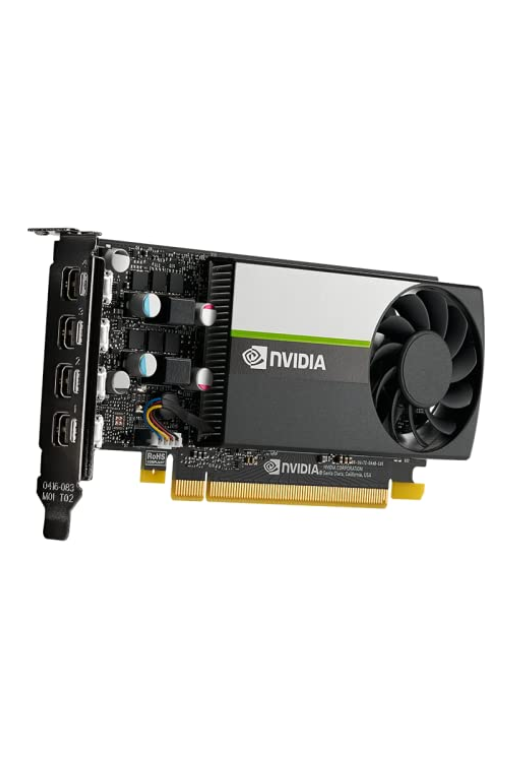

NVIDIA T1000 4GB GDDR6 Professional Graphics Card
The NVIDIA T1000 is a compact professional workstation graphics card based on the NVIDIA Turing architecture, designed to deliver professional-grade graphics performance in a low-profile, single-slot form factor.
Featuring 896 CUDA cores, 4GB GDDR6 memory, a 128-bit memory interface, up to 160GB/s memory bandwidth, and 50W maximum power consumption, the T1000 is ideal for CAD, 3D modeling, engineering, architectural visualization, video editing, digital content creation, and multi-display professional workstation applications.
Its compact design provides four Mini DisplayPort 1.4 outputs and supports up to four high-resolution displays, making it particularly suitable for space-constrained professional workstations.
Description
The NVIDIA T1000 is a professional graphics solution engineered for users who require reliable GPU acceleration, professional application compatibility, and multi-display capability without the size and power requirements of larger workstation graphics cards.
Based on the NVIDIA Turing GPU architecture, the T1000 provides 896 CUDA cores and up to 2.5 TFLOPS of single-precision performance. This makes it well suited to professional applications that benefit from GPU acceleration, including 3D modeling, CAD, engineering visualization, digital content creation, and video editing.
The standard T1000 incorporates 4GB of GDDR6 graphics memory connected through a 128-bit memory interface, providing up to 160GB/s of memory bandwidth. NVIDIA also offers a separate T1000 8GB version with the same core architecture and memory interface but twice the memory capacity.
A major advantage of the T1000 is its compact physical design. The card measures approximately 2.713 inches in height × 6.137 inches in length and occupies only one expansion slot. Its low-profile design makes it suitable for compact workstations and systems where space is limited.
The T1000 provides four Mini DisplayPort 1.4 connectors, allowing professional users to operate multiple displays simultaneously. NVIDIA specifies support for configurations including four 3840 × 2160 displays at 120Hz, four 5120 × 2880 displays at 60Hz, or two 7680 × 4320 displays at 60Hz, subject to system configuration and display connectivity.
With a maximum power consumption of only 50W, the T1000 can operate without an auxiliary GPU power connector in supported workstation configurations. Its active cooling solution provides thermal management within the compact single-slot enclosure.
The T1000 is also designed for professional software environments, with support for CUDA, DirectCompute, and OpenCL compute APIs and professional graphics APIs including DirectX 12, OpenGL 4.6, and Vulkan 1.2 according to NVIDIA’s published specifications.
3. Complete Technical Specification
| Specification | NVIDIA T1000 |
|---|---|
| Product Family | NVIDIA T1000 |
| Architecture | NVIDIA Turing |
| GPU Class | Professional Workstation Graphics |
| GPU Memory | 4GB GDDR6 |
| 8GB Variant | Available as NVIDIA T1000 8GB |
| Memory Interface | 128-bit |
| Memory Bandwidth | Up to 160GB/s |
| CUDA Cores | 896 |
| Single-Precision Performance | Up to 2.5 TFLOPS |
| System Interface | PCI Express 3.0 x16 |
| Form Factor | Low-profile, single-slot |
| Dimensions | Approx. 2.713″ H × 6.137″ L |
| Cooling | Active |
| Maximum Power Consumption | 50W |
| Display Connectors | 4 × Mini DisplayPort 1.4 |
| DisplayPort Audio | Supported |
| Maximum Simultaneous Displays | Up to 4 |
| Maximum Display Configuration | 4 × 5120 × 2880 @ 60Hz |
| 8K Display Capability | Up to 2 × 7680 × 4320 @ 60Hz |
| Graphics APIs | DirectX 12, OpenGL 4.6, Vulkan 1.2 |
| Compute APIs | CUDA, DirectCompute, OpenCL |
| HDCP | HDCP 2.2 |
| NVIDIA RTX Desktop Manager | Supported |
| NVIDIA RTX Experience | Supported |
| NVIDIA Mosaic | Supported |
| Target Platform | Professional Workstations |
| Primary Workloads | CAD, 3D modeling, visualization, video editing, multi-display |
Specifications are based on NVIDIA’s official T1000 datasheet.
T1000 vs. T1000 8GB
| Feature | T1000 4GB | T1000 8GB |
|---|---|---|
| Memory | 4GB GDDR6 | 8GB GDDR6 |
| Memory Interface | 128-bit | 128-bit |
| Memory Bandwidth | Up to 160GB/s | Up to 160GB/s |
| CUDA Cores | 896 | 896 |
| Power | Up to 50W | Up to 50W* |
| Form Factor | Single-slot | Single-slot |
| Display Outputs | 4 × Mini DP 1.4 | 4 × Mini DP 1.4 |
*The exact board power specification can vary by variant/documentation; confirm the label/FRU when listing a specific 8GB board. NVIDIA’s current product comparison identifies the T1000 and T1000 8GB as separate models.
4. Applications
Professional CAD & Engineering
- AutoCAD
- Solid modeling
- Mechanical design
- Engineering visualization
- CAD assemblies
- Product development
- Technical documentation
3D & Visualization
- 3D modeling
- Architectural visualization
- Product visualization
- Digital design
- Viewport acceleration
- Professional graphics applications
Video & Content Creation
- Video editing
- Motion graphics
- Content creation
- Multi-display editing environments
- Professional media workflows
Professional Workstations
- Compact workstations
- Low-profile desktop systems
- Engineering workstations
- Architecture workstations
- Financial multi-monitor systems
- Control-room visualization
- Professional office environments
Multi-Display Workflows
The four Mini DisplayPort outputs make the T1000 particularly useful for:
- Multi-monitor workstations
- Financial trading interfaces
- Control centers
- Data visualization
- Engineering dashboards
- Digital signage
- Professional productivity environments
5. Compatibility
The NVIDIA T1000 is designed for PCI Express x16-compatible professional workstation systems.
Hardware Requirements
- PCI Express x16 slot
- PCIe 3.0 support
- Low-profile workstation chassis
- Single-slot clearance
- Adequate system airflow
- Compatible NVIDIA driver installation
- Operating system supported by the applicable NVIDIA professional driver
NVIDIA’s quick-start documentation specifies a PCI Express x16 slot as the motherboard requirement and lists supported operating environments including Windows 64-bit and several Linux distributions.
Physical Compatibility
The low-profile, single-slot design is particularly useful for:
- Small-form-factor workstations
- Compact professional PCs
- Space-constrained systems
- OEM workstations
- Professional desktop systems
Because workstation manufacturers may use proprietary brackets, heatsinks, or BIOS configurations, the specific system’s GPU compatibility should be confirmed before installation.
6. Key Benefits
Professional Turing Architecture
The T1000 uses NVIDIA’s Turing architecture, providing reliable GPU acceleration for professional graphics and compute applications.
896 CUDA Cores
Provides substantial parallel-processing capability for professional applications and GPU-accelerated workflows.
4GB GDDR6 Memory
The standard model provides 4GB of fast GDDR6 memory for professional graphics, CAD, visualization, and multi-application workflows.
Up to 160GB/s Bandwidth
The 128-bit memory interface delivers up to 160GB/s of memory bandwidth, helping maintain responsive viewport and graphics performance.
Compact Single-Slot Design
The low-profile, single-slot construction allows professional GPU acceleration in compact workstation systems.
Low Power Consumption
At up to 50W, the T1000 offers professional graphics acceleration without the power requirements of larger workstation GPUs.
Four Display Outputs
Four Mini DisplayPort 1.4 connectors allow the creation of large multi-monitor workspaces and high-resolution professional display configurations.
Professional Software Support
Support for CUDA, DirectCompute, OpenCL, DirectX, OpenGL, and Vulkan provides compatibility with a broad range of professional applications.
8GB Option Available
For applications that require more graphics memory, NVIDIA also offers the T1000 8GB, which doubles the memory capacity while maintaining the same basic T1000 platform.
7. SEO Title
NVIDIA T1000 4GB GDDR6 Professional GPU | Low-Profile PCIe Workstation Graphics Card
Related products
-
QLogic 7023303 Dual-Port 16Gb Fibre Channel / 10Gb FCoE Host Bus Adapter
Read more QLogic 7023303 Dual-Port 16Gb Fibre Channel / 10Gb FCoE Host Bus Adapter
The QLogic 7023303 is a high-performance dual-port Host Bus Adapter designed for enterprise SAN and data-center environments. It delivers up to 16Gbps Fibre Channel or 10Gbps Fibre Channel over Ethernet (FCoE) connectivity through two SFP+ ports and a PCI Express x8 host interface, providing flexible, high-bandwidth server-to-storage connectivity.
Quick View -
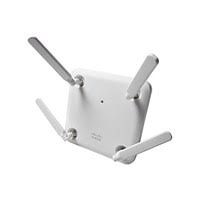
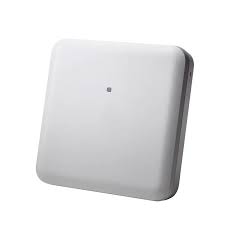
Cisco AIR-AP1852I-I-K9 Aironet 1850 Series Access Point
Read more Cisco AIR-AP1852I-I-K9 Aironet 1850 Series Wireless Access Point
The Cisco Aironet AIR-AP1852I-I-K9 is a high-performance dual-band enterprise wireless access point featuring 802.11ac Wave 2, 4×4 MIMO, four spatial streams, and integrated omnidirectional antennas. Designed for indoor enterprise environments, it delivers up to 1.7 Gbps on the 5 GHz radio and supports advanced technologies such as MU-MIMO, transmit beamforming, Cisco FlexConnect, and Mobility Express for scalable, reliable wireless connectivity.
Quick View -
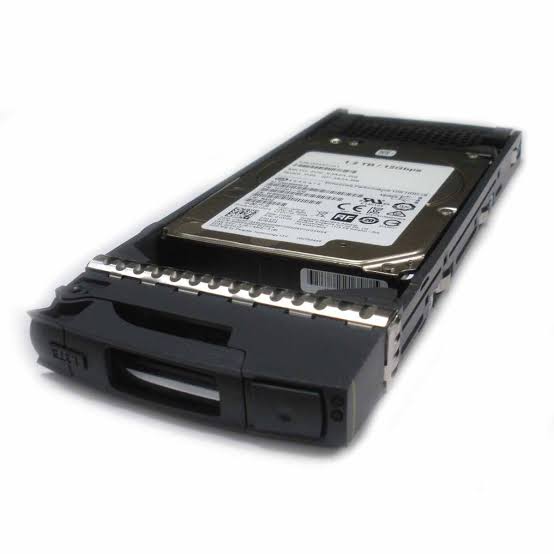
Oracle/Sun 7093015 600GB 10K RPM SAS-3 2.5″ Hard Drive Assembly with Caddy
Read more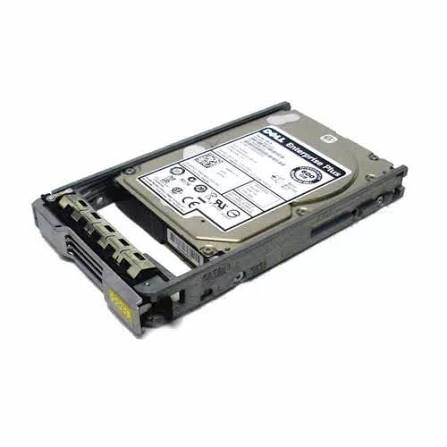
Oracle/Sun 7093015 600GB 10K RPM SAS-3 2.5″ Hard Drive Assembly with Caddy
The Oracle/Sun 7093015 is a 600GB 10,000 RPM SAS-3 enterprise hard drive assembly designed for compatible Oracle Exadata server and storage platforms. Featuring a 2.5-inch form factor and high-speed 12Gb/s SAS-3 interface, this drive assembly provides reliable, high-performance storage for enterprise workloads, system replacement, maintenance, and data-center infrastructure.
Quick View -

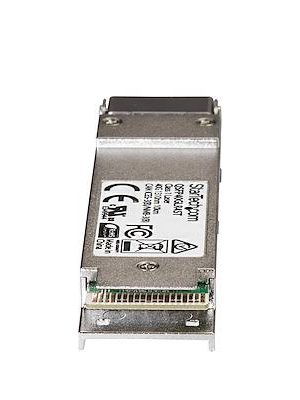
Arista Compatible 40G QSFP+ to 10G SFP+ Adapter Converter Module
Read more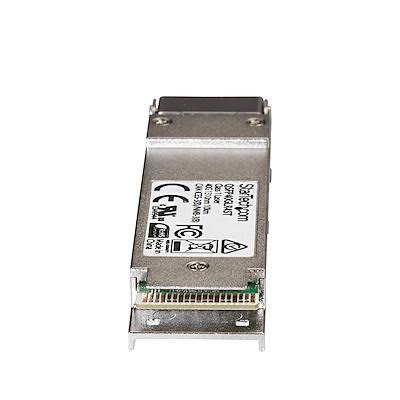
Arista Compatible 40G QSFP+ to 10G SFP+ Adapter Converter Module
The Arista QSFP-SFP10G adapter is a converter module designed to provide 10 Gigabit Ethernet and 1 Gigabit Ethernet connectivity through 40G QSFP+ ports. It enables compatible Arista QSFP-only platforms to use lower-speed SFP/SFP+ modules, providing a practical and cost-effective solution for network migration, connectivity expansion, and mixed-speed Ethernet environments.
Quick View
