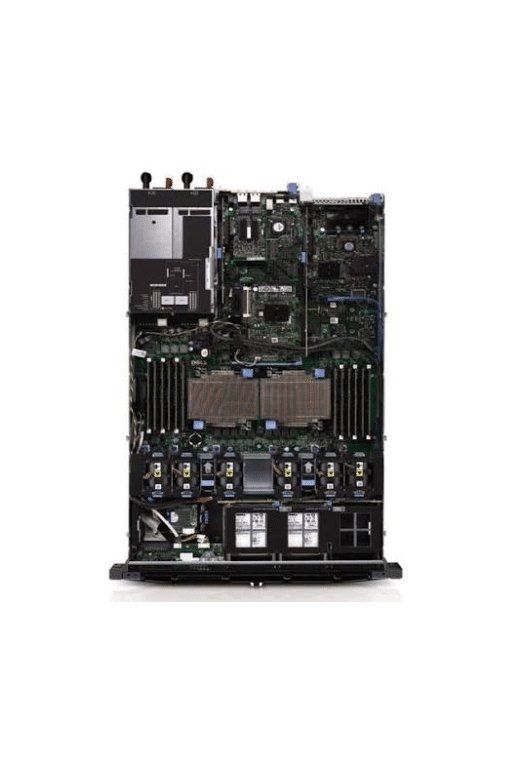
Dell PowerEdge R610
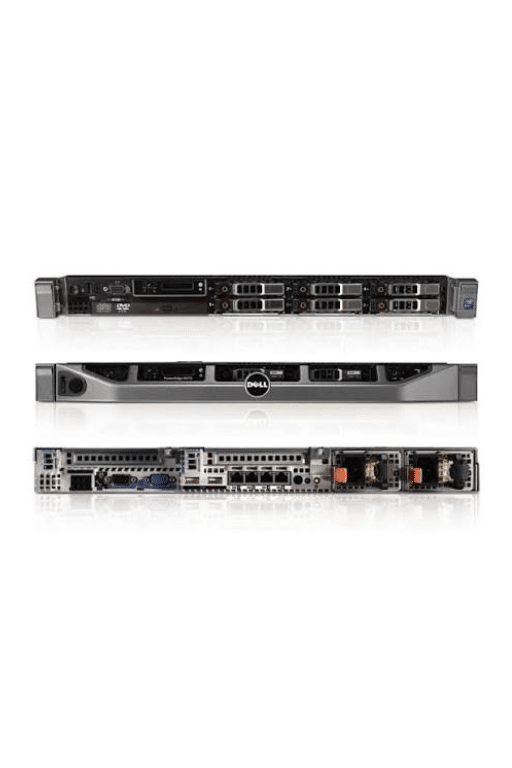
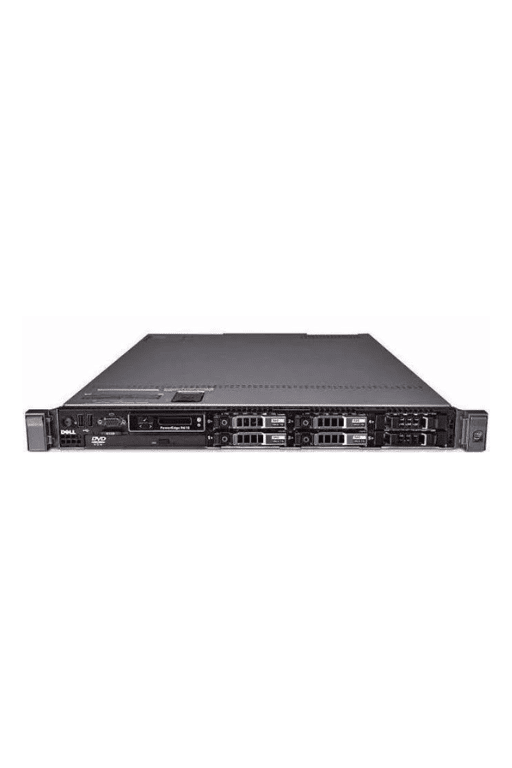
The Dell PowerEdge R610 is a reliable 2U dual-socket rack server designed for enterprise infrastructure, virtualization, databases, application hosting, and general-purpose data-center workloads. It supports Intel Xeon 5500/5600 Series processors, up to 192GB DDR3 ECC memory, up to 6 × 2.5-inch SAS/SATA drives, PERC RAID controllers, Gigabit Ethernet, PCIe expansion, redundant hot-plug power supplies, and Dell Remote Access Controller management.
Description
The Dell PowerEdge R610 is an enterprise-class 2U dual-socket rack server designed to provide dependable computing performance, storage flexibility, and enterprise management capabilities in a compact rack-mounted platform.
Built on the Intel Xeon 5500 and 5600 Series processor platforms, the R610 provides a choice of multi-core CPU configurations suitable for a wide range of business and infrastructure workloads.
With support for dual processors, DDR3 ECC memory, SAS/SATA storage, hardware RAID, redundant power supplies, Gigabit Ethernet, and PCIe expansion, the R610 is well suited for organizations requiring a dependable server platform for virtualization, databases, web hosting, file services, and enterprise applications.
Key Features
- Brand: Dell
- Model: PowerEdge R610
- Form Factor: 2U Rack Server
- CPU Sockets: 2
- Processor: Intel Xeon 5500 / 5600 Series
- Memory: Up to 192GB DDR3 ECC
- Memory Slots: 12 DIMM slots
- Storage: SAS / SATA
- Drive Bays: Up to 6 × 2.5-inch drives
- RAID: Dell PERC RAID controller options
- Networking: Integrated Gigabit Ethernet
- Expansion: PCIe expansion slots
- Remote Management: Dell Remote Access Controller
- Power: Redundant hot-plug power supplies
- Cooling: Redundant hot-plug fan configuration
- Primary Applications: Virtualization, Databases, Web Hosting, File Services & Enterprise Applications
Intel Xeon Processing
The R610 supports up to two Intel Xeon 5500 or 5600 Series processors.
The dual-socket architecture provides additional processing capacity for multi-threaded and enterprise workloads.
Supported processor configurations can be selected according to requirements for:
- Core count
- Clock speed
- Cache
- Power consumption
- Application performance
The R610 can therefore be configured for both general-purpose server applications and more demanding workloads.
DDR3 ECC Memory
The server provides 12 DIMM slots and supports up to 192GB of DDR3 ECC memory in supported configurations.
ECC memory is designed to detect and correct certain types of memory errors, providing additional reliability for server workloads.
The available memory capacity makes the R610 suitable for:
- Virtualization
- Database applications
- Web servers
- Application servers
- File services
- Enterprise software
Flexible 2.5-Inch Storage
The R610 uses a compact 2.5-inch drive architecture and supports up to six internal drive bays, depending on the chassis configuration.
Supported drive technologies include:
- SAS HDD
- SATA HDD
- SAS SSD
- SATA SSD
The hot-plug drive design allows supported drives to be replaced without shutting down the server.
Hardware RAID
The R610 supports Dell PERC hardware RAID controllers.
RAID configurations can provide:
- Data redundancy
- Improved storage availability
- Performance optimization
- Drive fault tolerance
- Centralized storage management
The exact PERC controller depends on the individual R610 configuration.
Enterprise Networking
The R610 provides integrated Gigabit Ethernet connectivity and supports additional network adapters through its expansion architecture.
Networking can be configured for separate:
- Production traffic
- Management traffic
- Backup traffic
- Storage traffic
Additional network interfaces can be installed where required.
PCIe Expansion
PCIe expansion slots provide the ability to install additional hardware such as:
- Network adapters
- Fibre Channel HBAs
- Storage controllers
- SAS adapters
- Other PCIe expansion cards
This allows the R610 to be adapted for different infrastructure requirements.
Remote Server Management
The R610 includes Dell remote-management capabilities through its Dell Remote Access Controller (DRAC) platform.
Depending on the installed DRAC generation and licensing, administrators can perform tasks such as:
- Remote hardware monitoring
- Server power control
- Hardware inventory
- System diagnostics
- Remote console access
- Configuration
- Troubleshooting
This can reduce the need for physical access to the server.
Redundant Hot-Plug Power Supplies
The R610 supports redundant hot-plug power supplies.
A redundant PSU configuration can improve server availability by allowing a failed power supply to be replaced without shutting down the system.
This is particularly important for:
- Data centers
- Enterprise server rooms
- Virtualization environments
- Business-critical applications
2U Rack-Mount Design
The PowerEdge R610 uses a 2U rack-mounted chassis, providing additional internal space compared with Dell’s 1U server platforms.
The 2U form factor accommodates:
- Multiple drive bays
- Dual processors
- Large memory configurations
- Expansion cards
- Redundant cooling
- Redundant power
It is suitable for standard data-center racks and server-room deployments.
Ideal Applications
Virtualization
The dual-socket architecture and ECC memory make the R610 suitable for virtualization platforms and small-to-medium virtual-machine environments.
Database Servers
The R610 can be configured with multi-core Xeon processors, RAID storage and large memory capacity for database applications.
Web & Application Hosting
Its reliable enterprise architecture makes it suitable for web servers, application servers and internal business applications.
File & Print Services
SAS/SATA storage and RAID support provide a practical platform for file and print services.
Enterprise Infrastructure
The R610 can be deployed for:
- ERP
- CRM
- Monitoring
- Backup
- Development
- Internal applications
- Infrastructure services
Technical Specifications
| Specification | Details |
|---|---|
| Brand | Dell |
| Model | PowerEdge R610 |
| Form Factor | 2U Rack Server |
| CPU Sockets | 2 |
| Processor Family | Intel Xeon 5500 / 5600 Series |
| Memory Slots | 12 × DIMM |
| Maximum Memory | Up to 192GB |
| Memory Type | DDR3 ECC |
| Storage | SAS / SATA |
| Drive Bays | Up to 6 × 2.5″ |
| RAID | Dell PERC RAID |
| Networking | Gigabit Ethernet |
| Expansion | PCIe |
| Remote Management | Dell Remote Access Controller |
| Power | Redundant hot-plug PSU |
| Cooling | Redundant hot-plug fans |
| Rack Height | 2U |
| Primary Applications | Virtualization, Databases, Web Hosting & Enterprise Applications |
Note: Exact processor, RAM, RAID controller, drive configuration, network adapters, DRAC version and power-supply specifications depend on the specific R610 configuration/SKU.
Key Benefits
Dual-Socket Architecture: Supports two Intel Xeon processors for increased processing capacity.
Reliable ECC Memory: Up to 192GB DDR3 ECC memory in supported configurations.
Flexible Storage: Supports multiple SAS/SATA 2.5-inch drives with RAID options.
Enterprise RAID: PERC controllers provide storage redundancy and management.
Redundant Power: Hot-plug redundant PSUs help improve availability.
Remote Management: Dell DRAC provides remote monitoring and administration.
PCIe Expansion: Supports additional networking, storage and Fibre Channel hardware.
2U Enterprise Design: Provides additional internal expansion capacity while remaining rack-mountable.
Product Summary
The Dell PowerEdge R610 is a dependable 2U dual-socket enterprise rack server designed for organizations requiring reliable computing, storage, and expansion capabilities.
With support for dual Intel Xeon 5500/5600 Series processors, up to 192GB DDR3 ECC memory, up to six 2.5-inch SAS/SATA drives, Dell PERC RAID controllers, PCIe expansion, Gigabit Ethernet, remote management, and redundant hot-plug power supplies, the R610 remains a practical platform for virtualization, databases, web hosting, file services, application hosting, and general enterprise infrastructure.
Related products
-

Dell EMC PowerEdge R450
Read more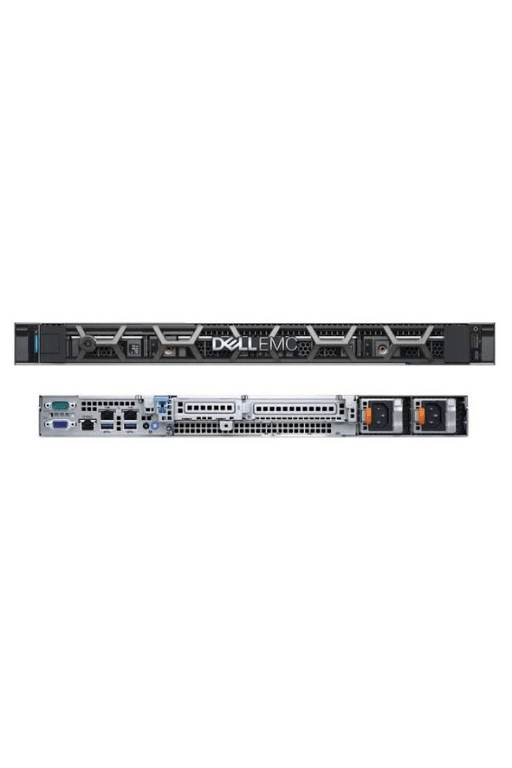
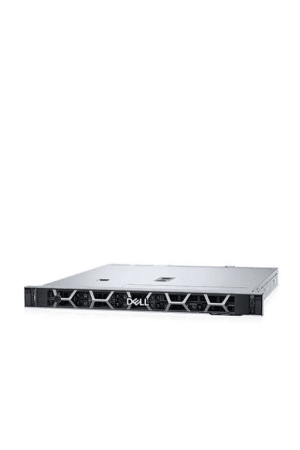
The Dell EMC PowerEdge R450 is a powerful 1U dual-socket rack server designed for virtualization, databases, web hosting, business applications, scale-out infrastructure, and other demanding workloads. It supports up to two 3rd Generation Intel Xeon Scalable processors with up to 24 cores per processor, up to 1TB DDR4 ECC RDIMM memory, flexible 2.5-inch or 3.5-inch SAS/SATA storage, PCIe Gen 4 expansion, redundant hot-swappable power supplies, and iDRAC9 for comprehensive remote management.
Quick View -
Dell PowerEdge R360 1U Rack Server
Read more Dell PowerEdge R360 is a modern 1U single-socket rack server designed for small and medium-sized businesses, branch offices, virtualization, databases, web hosting, file services, and other demanding business applications. It supports Intel Xeon E-2400 or Xeon 6300 series processors with up to 8 cores, up to 128GB DDR5 ECC UDIMM memory, flexible hot-plug SAS/SATA and NVMe storage, PCIe Gen 5 expansion, PERC RAID controllers, and iDRAC9 remote management.
Quick View -

Dell PowerEdge R6625
Read more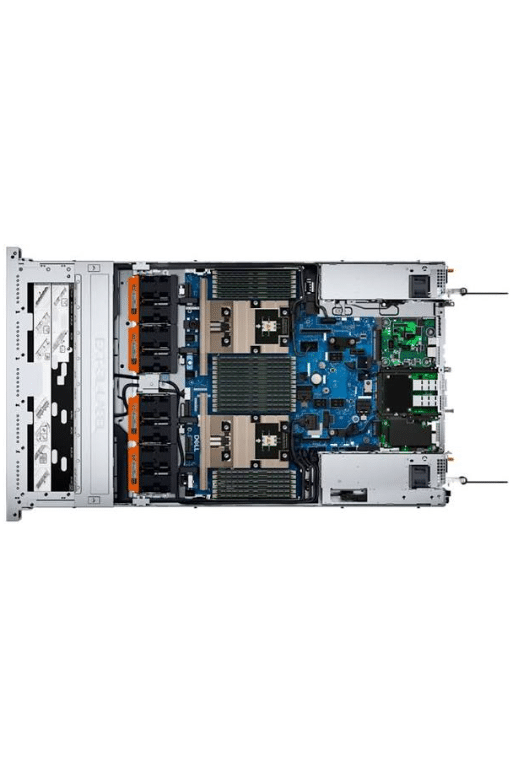
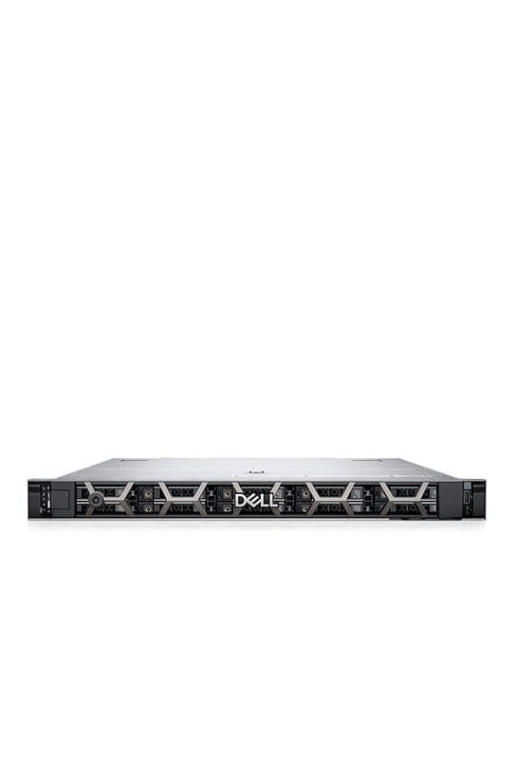
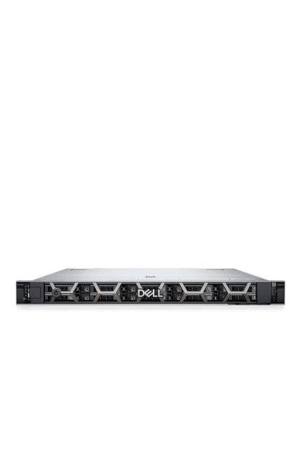
The Dell PowerEdge R6625 is a high-density 1U dual-socket enterprise rack server powered by AMD EPYC 4th Generation 9004 Series processors. Designed for demanding workloads such as high-performance computing (HPC), virtualization, VDI, databases, data warehouses, eCommerce, and data-intensive applications, the R6625 combines high core density, DDR5 memory, PCIe Gen 5 connectivity, flexible SAS/SATA/NVMe storage, optional GPU acceleration, and advanced Dell management technologies.
Quick View -


Dell PowerEdge R6525
Read more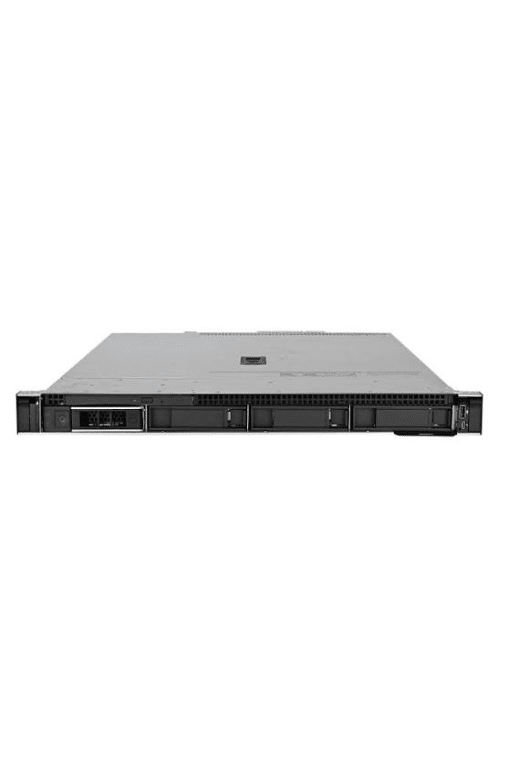
The Dell PowerEdge R6525 is a high-performance 1U dual-socket enterprise rack server powered by AMD EPYC 7002/7003 Series processors. Designed for demanding workloads including virtualization, high-performance computing, software-defined storage, databases, VDI, and high-density enterprise applications, the R6525 combines high core density, up to 4TB DDR4 memory, PCIe Gen 4 expansion, flexible SAS/SATA/NVMe storage, advanced RAID options, and iDRAC9 management in a compact 1U chassis.
Quick View