
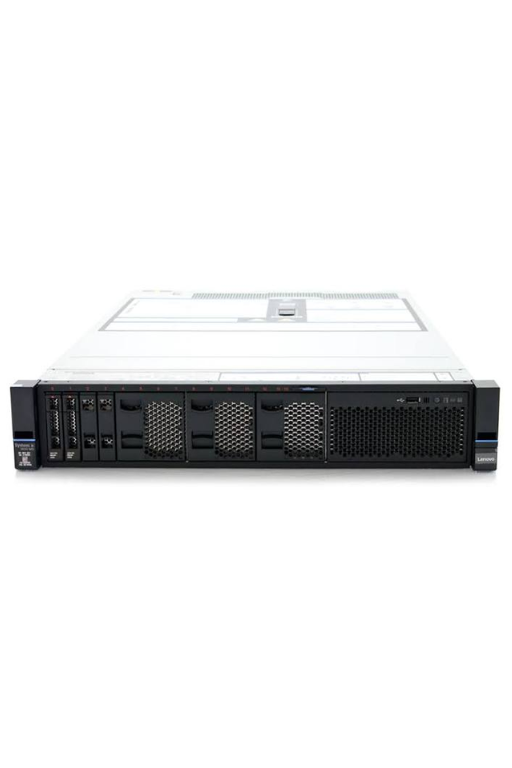
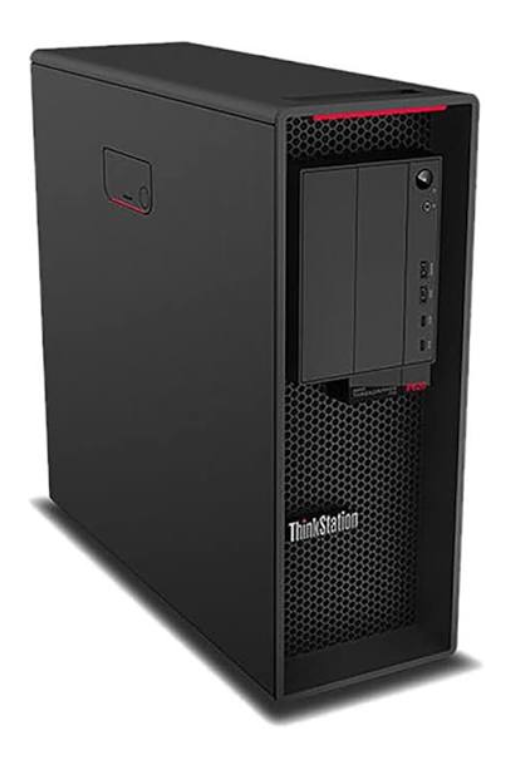
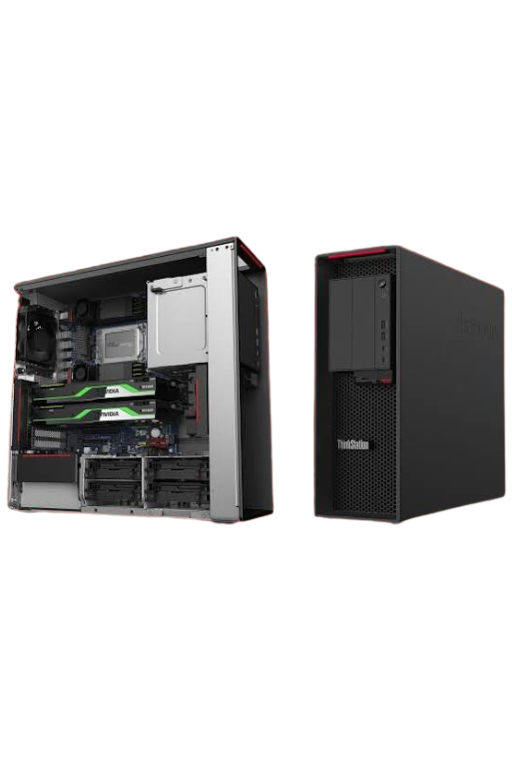
Lenovo-ThinkStation P620
The Lenovo ThinkStation P620 is a high-performance professional workstation designed for demanding engineering, 3D design, CAD, content creation, simulation, AI, and data-intensive workloads. It combines AMD Ryzen Threadripper PRO processors, ECC DDR4 memory, extensive PCIe 4.0 expansion, high-speed NVMe storage, and support for professional NVIDIA and AMD graphics.
Description
The Lenovo ThinkStation P620 is a powerful tower workstation built for professional users who require exceptional multi-core processing performance and substantial graphics and expansion capabilities. Its single-socket architecture supports AMD Ryzen Threadripper PRO processors with configurations reaching 64 cores and 128 threads, providing workstation-class performance for highly parallel workloads.
The workstation supports AMD Ryzen Threadripper PRO 3000 and 5000 Series processors, including the Threadripper PRO 5995WX with up to 64 cores and 128 threads. This makes the P620 particularly suitable for complex simulations, rendering, scientific workloads, engineering applications, software development, and professional content creation.
For memory-intensive applications, the P620 provides eight DDR4-3200 ECC RDIMM slots and supports up to 1TB of memory with supported configurations. ECC memory helps improve data integrity and system reliability during demanding professional workloads.
Graphics capabilities are another major strength. Depending on configuration, the ThinkStation P620 supports professional GPUs including NVIDIA RTX A6000, NVIDIA Quadro RTX 8000, and AMD Radeon PRO W6800, with configurations supporting up to two high-end professional graphics cards and NVLink on applicable NVIDIA configurations.
Storage can be configured using 3.5-inch SATA HDDs and M.2 PCIe NVMe SSDs, with Lenovo documentation listing support for up to 5 × 3.5-inch SATA drives and 11 × M.2 SSDs in supported configurations. Integrated storage controllers support RAID configurations including RAID 0, 1, 5, and 10 depending on the storage interface.
The P620 also provides extensive expansion through PCIe 4.0 slots, including four x16 slots and two x8 slots. Its onboard 10GbE RJ-45 Ethernet provides high-speed network connectivity, while optional wireless and additional Ethernet adapters are available depending on configuration.
Key Specifications
| Feature | Specification |
|---|---|
| Product | Lenovo ThinkStation P620 |
| Product Type | Professional Workstation |
| Form Factor | Tower, 33L |
| Processor | AMD Ryzen Threadripper PRO 3000 / 5000 Series |
| Maximum CPU | Up to AMD Ryzen Threadripper PRO 5995WX |
| Maximum Cores / Threads | Up to 64 cores / 128 threads |
| Chipset | AMD WRX80 |
| Memory | DDR4-3200 ECC RDIMM |
| DIMM Slots | 8 |
| Maximum Memory | Up to 1TB |
| Storage | SATA HDD and PCIe NVMe SSD |
| Maximum Storage | Up to 5 × 3.5″ SATA HDD + 11 × M.2 SSD, configuration dependent |
| Graphics | NVIDIA RTX / Quadro and AMD Radeon PRO options |
| GPU Support | Up to 2 high-end professional GPUs |
| Expansion | 4 × PCIe 4.0 x16 + 2 × PCIe 4.0 x8 |
| Networking | 10GbE RJ-45 |
| RAID | RAID 0/1/5/10, configuration dependent |
| Security | TPM 2.0, BIOS passwords, chassis intrusion protection |
| Power Supply | 1000W, 80 PLUS Platinum |
| Dimensions | Approx. 165 × 455 × 446 mm |
| Maximum Weight | Approx. 24 kg |
Key Features & Benefits
- AMD Ryzen Threadripper PRO workstation-class processing
- Up to 64 CPU cores and 128 threads
- Up to 1TB ECC DDR4 memory
- High-speed PCIe 4.0 expansion
- Support for professional NVIDIA RTX and AMD Radeon PRO GPUs
- Support for multi-GPU configurations
- High-speed 10Gb Ethernet
- Extensive NVMe SSD storage support
- Professional-grade ECC memory for improved reliability
- TPM 2.0 and enterprise security features
- 1000W 80 PLUS Platinum power supply
- ISV certifications for major professional applications, including Adobe, Autodesk, AVID, Bentley, Dassault, PTC, and Siemens.
Recommended Applications
The ThinkStation P620 is ideal for:
- CAD / CAM / CAE
- 3D modeling and rendering
- Engineering and architectural design
- Scientific and technical computing
- AI and machine-learning workloads
- Video production and content creation
- Simulation and visualization
- Data analysis
- Software development
- Professional graphics and workstation applications
Related products
-

Lenovo-ThinkStation P920
Read more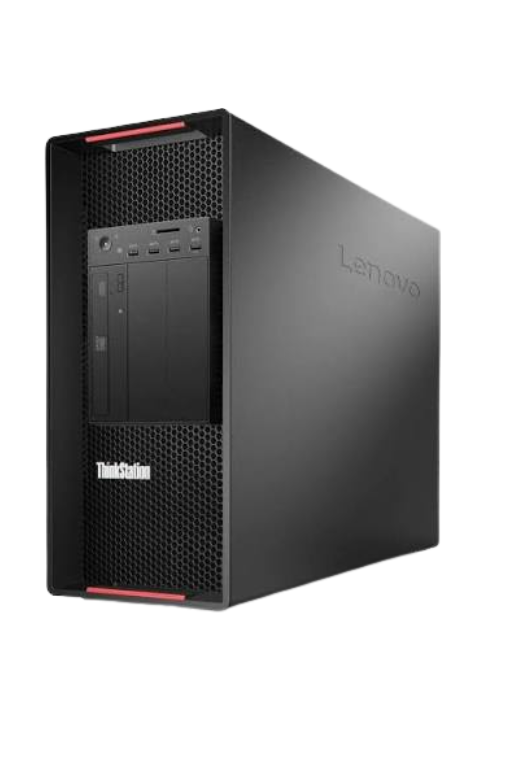
The Lenovo ThinkStation P920 is a high-performance dual-processor tower workstation designed for demanding professional workloads such as 3D modeling, CAD/CAE, rendering, simulation, AI, scientific computing, and advanced content creation. It supports up to two Intel Xeon Scalable processors, up to 2TB of DDR4 ECC memory, multiple professional GPUs, and extensive PCIe and storage expansion.
Quick View -
Lenovo-ThinkStation P520
Read more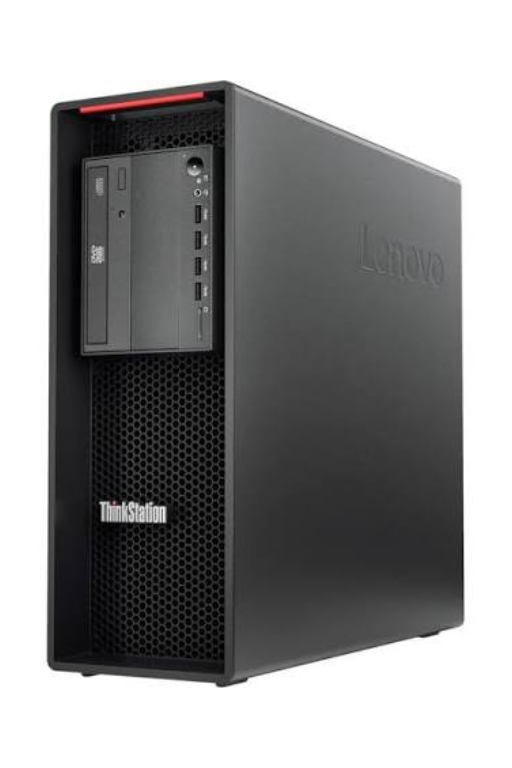
The Lenovo ThinkStation P520 is a professional tower workstation designed for demanding CAD, 3D modeling, engineering, simulation, rendering, and content-creation workloads. It supports Intel Xeon W processors, ECC DDR4 memory, professional NVIDIA Quadro graphics, high-speed NVMe storage, and extensive PCIe expansion.
Quick View -

Lenovo-ThinkStation P348
Read more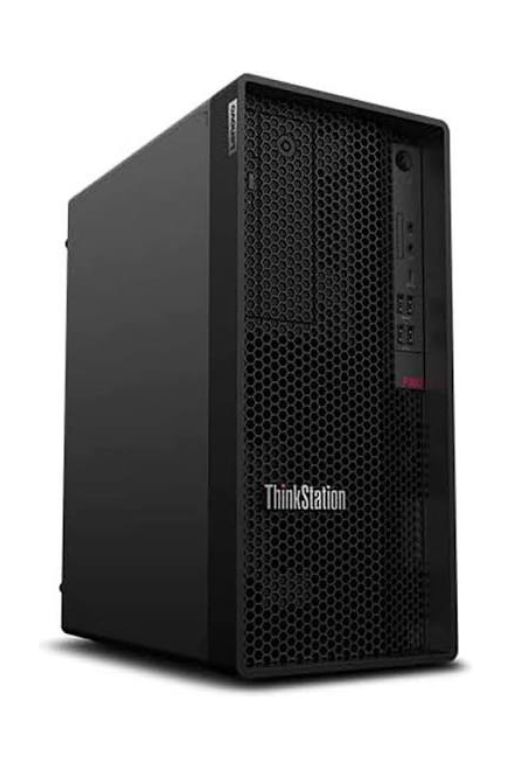
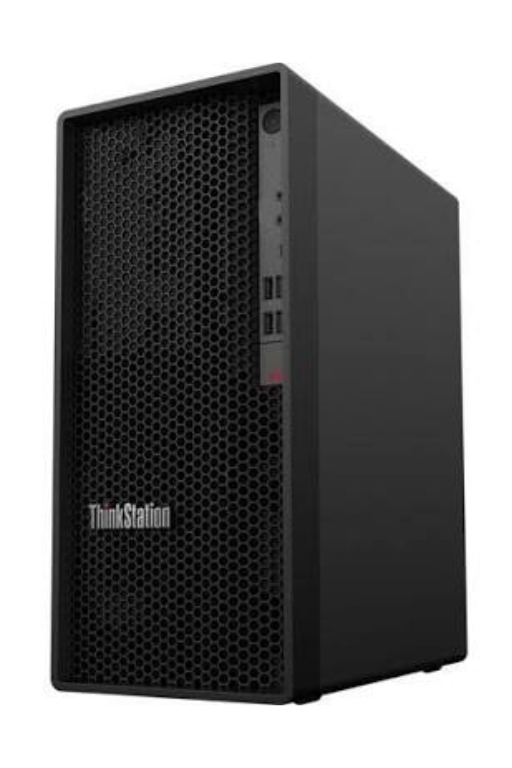
The Lenovo ThinkStation P348 is an entry-level professional workstation designed for CAD, engineering, architecture, 3D design, content creation, and other demanding business applications. It combines 11th Gen Intel Core processors, DDR4 memory, professional NVIDIA graphics, PCIe expansion, and flexible storage in a compact tower platform.
Quick View -
Lenovo-ThinkStation P360 Tower
Read more The Lenovo ThinkStation P360 Tower is a professional entry-level workstation designed for engineering, CAD, 3D design, visualization, content creation, and data-intensive professional applications. It combines 12th Gen Intel Core processors, DDR5 memory, professional NVIDIA RTX graphics, PCIe Gen 4 expansion, and high-speed NVMe storage in a compact tower workstation.
Quick View
