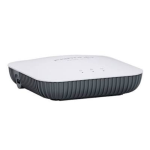

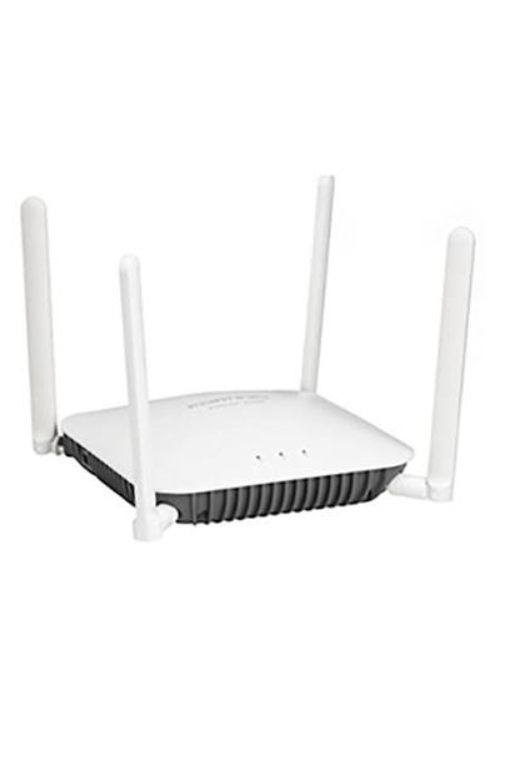

Fortinet FAP-231G FortiAP
The Fortinet FAP-231G FortiAP is an enterprise-class Wi-Fi 6E indoor wireless access point designed to deliver fast, secure, and reliable wireless connectivity for branch offices, enterprise environments, campuses, education, healthcare, retail, and distributed networks.
The FAP-231G features a tri-radio 2.4 GHz + 5 GHz + 6 GHz architecture, with 2×2 MU-MIMO and combined wireless throughput of up to 4.177 Gbps across its three radios: up to 574 Mbps on 2.4 GHz, 1.201 Gbps on 5 GHz, and 2.402 Gbps on 6 GHz.
It includes one 2.5GbE RJ45 port and one Gigabit Ethernet RJ45 port, with 802.3at PoE support, making it suitable for modern high-density wireless deployments where multi-gigabit wired connectivity is required.
Description
The Fortinet FAP-231G FortiAP is a compact enterprise wireless access point built around Wi-Fi 6E (802.11ax) technology. By extending Wi-Fi operation into the 6 GHz band, it provides additional wireless spectrum and supports high-performance connectivity with reduced congestion in compatible regulatory domains.
The access point uses three radios plus a dedicated BLE radio. Its radio architecture can provide simultaneous wireless service across 2.4 GHz, 5 GHz, and 6 GHz, or support alternative radio configurations with additional scanning capabilities. Fortinet also supports 24/7 wireless scanning capabilities for monitoring and security functions.
The FAP-231G provides four integrated Wi-Fi antenna elements and an integrated BLE/Zigbee radio. The internal antenna design makes it well suited for ceiling and wall-mounted indoor deployments where a clean, low-profile installation is preferred.
For wired connectivity, the FAP-231G provides a 2.5GbE RJ45 interface for high-speed network access and an additional 1GbE RJ45 interface. The 2.5GbE interface supports 802.3at PoE, while an optional DC power supply can also be used.
The FAP-231G can be centrally managed through compatible FortiGate infrastructure and Fortinet cloud-based management platforms, providing centralized wireless configuration, monitoring, security policies, and integration with the Fortinet Security Fabric. Fortinet’s current compatibility documentation lists the FAP-231G as supported with FortiOS 8.0.0.
Key Specifications
| Specification | Details |
|---|---|
| Brand | Fortinet |
| Product Family | FortiAP |
| Model | FAP-231G |
| Product Type | Indoor Enterprise Wireless Access Point |
| Wi-Fi Standard | Wi-Fi 6E / IEEE 802.11ax |
| Radio Architecture | 3 + 1 BLE |
| Wireless Bands | 2.4 GHz / 5 GHz / 6 GHz |
| MIMO | 2×2 MU-MIMO |
| 2.4 GHz Data Rate | Up to 574 Mbps |
| 5 GHz Data Rate | Up to 1,201 Mbps |
| 6 GHz Data Rate | Up to 2,402 Mbps |
| Combined PHY Rate | Up to approximately 4.18 Gbps |
| Wi-Fi Antennas | 4 internal antennas |
| BLE/Zigbee | Integrated |
| Primary Ethernet | 1 × 10/100/1000/2500 Base-T RJ45 |
| Secondary Ethernet | 1 × 10/100/1000 Base-T RJ45 |
| PoE | 802.3at PoE |
| USB | 1 × USB 3.0 |
| Console | RJ45 serial |
| Management | FortiGate / FortiEdge Cloud / FortiLAN Cloud |
| Security | WPA/WPA2/WPA3, 802.1X |
| Advanced Wi-Fi | OFDMA, BSS Coloring, UL/DL MU-MIMO, TWT |
| Wireless Monitoring | WIDS/WIPS, Rogue AP Detection, Spectrum Analyzer |
| Operating Temperature | 0°C to 50°C |
| Dimensions | 182.4 × 182.4 × 54 mm |
| Weight | Approx. 0.8 kg |
| Mounting | Ceiling / T-Rail / Wall |
| Deployment | Indoor |
The principal wireless and hardware specifications are based on Fortinet’s FortiAP documentation and product matrix.
Key Features & Benefits
- Wi-Fi 6E Technology — Extends enterprise wireless connectivity into the 6 GHz spectrum.
- Tri-Radio Architecture — Supports 2.4 GHz, 5 GHz, and 6 GHz wireless operation.
- 2×2 MU-MIMO — Improves wireless efficiency for multiple simultaneous clients.
- Up to 4.18 Gbps Combined PHY Rate — 574 Mbps + 1,201 Mbps + 2,402 Mbps across the three radios.
- 2.5GbE Connectivity — Provides a high-speed wired uplink suitable for modern Wi-Fi deployments.
- 802.3at PoE Support — Allows power and data to be delivered through a single Ethernet connection.
- Integrated BLE/Zigbee — Supports beaconing, locationing, and IoT-related applications.
- OFDMA — Improves spectrum efficiency in high-density environments.
- BSS Coloring / Spatial Reuse — Helps improve wireless efficiency in environments with overlapping networks.
- UL/DL MU-MIMO — Enables more efficient simultaneous communication with multiple clients.
- Target Wake Time (TWT) — Helps improve wireless efficiency for compatible client devices.
- WIDS/WIPS Capabilities — Supports wireless intrusion detection and prevention functions.
- Spectrum Analysis — Helps administrators identify wireless interference and RF issues.
- Mesh Support — Enables flexible wireless deployment options where wired connectivity may be limited.
Wireless Performance
The FAP-231G uses three 2×2 radios:
| Radio | Frequency | Maximum PHY Rate |
|---|---|---|
| Radio 1 | 2.4 GHz | Up to 574 Mbps |
| Radio 2 | 5 GHz | Up to 1,201 Mbps |
| Radio 3 | 6 GHz | Up to 2,402 Mbps |
| Total | Tri-Band | Up to approx. 4.18 Gbps |
The 6 GHz radio supports channel widths up to 160 MHz, while the 5 GHz radio supports up to 80 MHz. The 6 GHz band availability and allowed channels depend on the regulatory domain and local wireless regulations.
Security & Wireless Management
The FAP-231G is designed to operate as part of Fortinet’s integrated security architecture. Security and wireless management capabilities include:
- WPA, WPA2, and WPA3 security
- 802.1X authentication
- Enterprise authentication methods
- Captive portal capabilities
- MAC allowlist/blocklist
- WIDS/WIPS
- Rogue AP detection
- Wireless packet capture
- Spectrum analysis
- Application control and web filtering
- Centralized wireless policy management
Fortinet’s documentation also identifies the FAP-231G as supporting dedicated or background wireless monitoring modes for WIDS/WIPS and rogue scanning.
FortiGate & Security Fabric Integration
The FAP-231G can be centrally managed as part of a Fortinet wireless deployment. Integration with compatible FortiGate infrastructure enables centralized configuration, monitoring, security policy enforcement, and coordinated network visibility.
Fortinet’s current compatibility matrix lists FAP-231G with FortiOS 8.0.0, while earlier FortiOS releases also support the model depending on the specific release and compatibility requirements.
Power & Connectivity
The FAP-231G supports 802.3at PoE through its primary Ethernet interface. Fortinet also lists an optional 12V DC power supply for the FAP-231G family.
Network Interfaces:
- 1 × 2.5GbE RJ45 — 10/100/1000/2500 Mbps
- 1 × Gigabit RJ45 — 10/100/1000 Mbps
- 1 × USB 3.0
- RJ45 serial console
Recommended Applications
The Fortinet FAP-231G is suitable for:
- Enterprise office Wi-Fi
- Branch office wireless networks
- Campus deployments
- Education and universities
- Healthcare facilities
- Retail environments
- Hospitality
- Government and institutional networks
- High-density indoor wireless
- Wi-Fi 6E client environments
- IoT and BLE deployments
- Wireless guest networks
- Secure corporate WLANs
- Fortinet Security Fabric deployments
Installation & Physical Design
The FAP-231G is designed for indoor installation and supports ceiling, T-rail, and wall mounting. Its compact dimensions of approximately 182.4 × 182.4 × 54 mm and weight of approximately 0.8 kg make it suitable for standard indoor access-point installations.
The unit operates from 0°C to 50°C and supports storage temperatures from -30°C to 70°C.
Licensing & Support
The FAP-231G is the physical wireless access point hardware. FortiCare support, FortiGate management, FortiLAN/FortiEdge Cloud services, and other subscription-based services may require separate licensing or subscriptions depending on the deployment model and purchased SKU.
Before listing the product as a bundle, verify whether the supplied SKU includes the required Fortinet support or cloud-management subscription.
Compatibility Note
The FAP-231G is a Wi-Fi 6E access point, not a Wi-Fi 7 model. Fortinet’s current documentation places the FAP-231G in its Wi-Fi 6E product family.
The availability and use of the 6 GHz band depend on the regulatory domain, country, and client-device support. Not all wireless clients support 6 GHz.
Related products
-
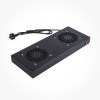
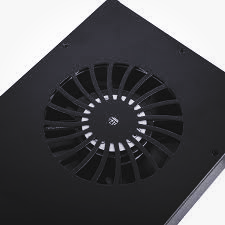

Rack Accessory Kit – Cooling Fan, 2 Shelves & 2 PDUs for 19-Inch Network Cabinets
Read more Rack Accessory Kit – Cooling Fan, 2 Shelves & 2 PDUs
Optimize the performance and organization of your server cabinet with this Rack Accessory Kit, including 1 cooling fan, 2 fixed shelves, and 2 Power Distribution Units (PDUs). Designed for standard 19-inch network racks, this accessory bundle enhances airflow, equipment support, and power management, making it ideal for server rooms, data centers, and enterprise networking environments.
Quick View -


AX210NGW Wi-Fi 6E AX210NGW Wireless WiFi Card
Read more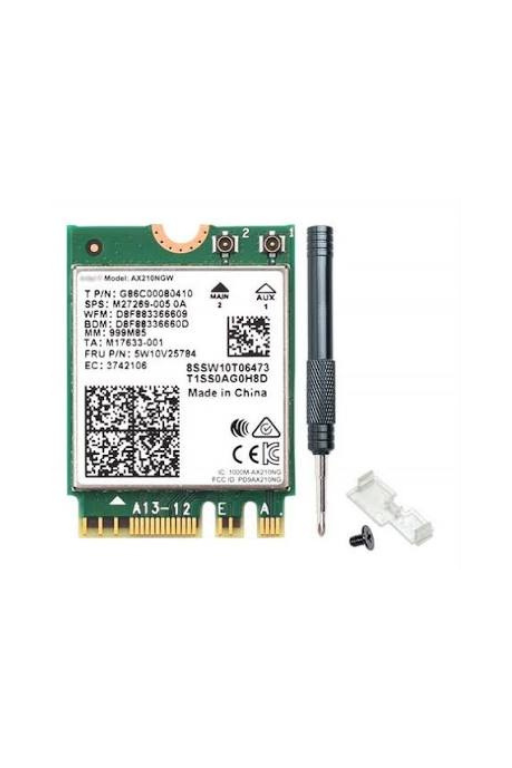
AX210NGW Wi-Fi 6E Wireless Network Card is a compact M.2 2230 wireless adapter designed to upgrade compatible laptops and PCs with fast tri-band Wi-Fi 6E connectivity across 2.4GHz, 5GHz, and 6GHz, plus integrated Bluetooth. With 2×2 MU-MIMO, 160MHz channel support, up to 2.4Gbps theoretical Wi-Fi speed, and PCIe/USB connectivity, it is well suited for high-speed networking, streaming, gaming, remote work, and everyday wireless connectivity.
Quick View -


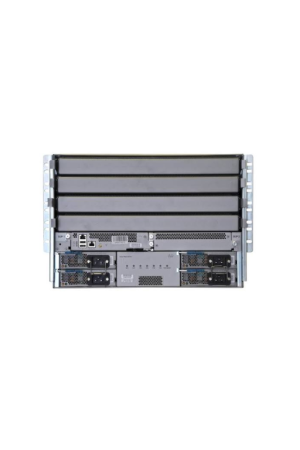
Cisco Nexus 9504 4-Slot Chassis Bundle
Read more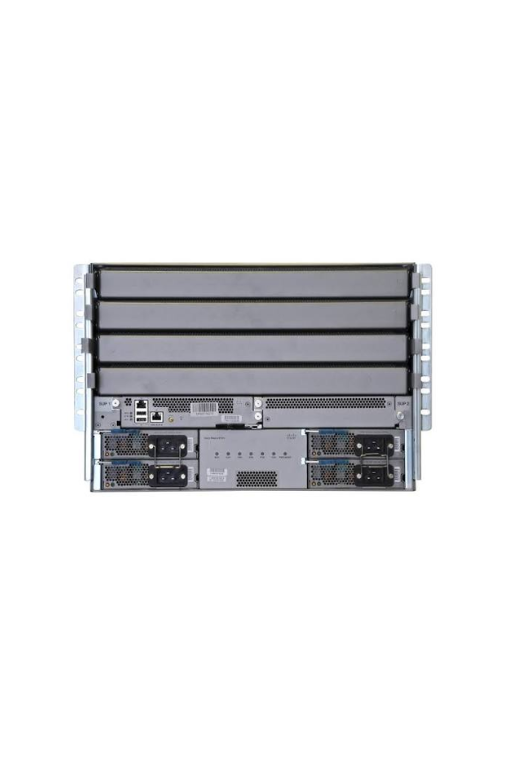
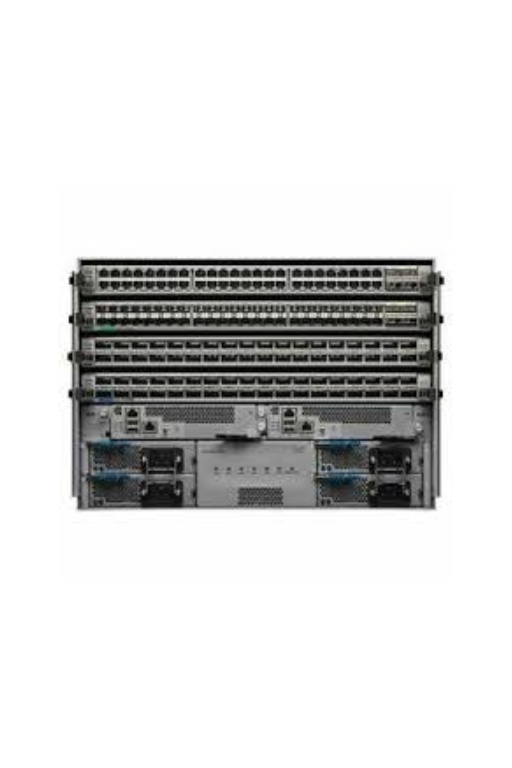
Cisco Nexus 9504 (N9K-C9504) chassis bundle is a high-capacity modular data-center switching platform supplied with 1 supervisor, 1 power supply, 2 system controllers, 4 fabric modules (FM-E), and 3 fan trays. The 4-slot chassis supports up to four line cards and is designed for scalable, high-performance data-center aggregation, spine, and core networking deployments.
Quick View -

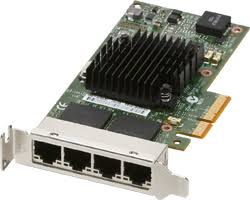
Sun/Oracle 7070195 Quad-Port GbE PCIe 2.0 Low Profile Adapter, UTP
Read more Sun/Oracle 7070195 Quad-Port GbE PCIe 2.0 Low Profile Adapter, UTP
The Sun/Oracle 7070195 Quad-Port GbE PCI Express 2.0 Low Profile Adapter is a four-port 1Gb Ethernet copper network interface card designed for enterprise server and storage environments. Featuring UTP connectivity and a low-profile PCIe 2.0 design, it provides four Gigabit Ethernet ports for expanding network connectivity on compatible Sun, Oracle, SPARC, and Fujitsu systems.
Quick View