

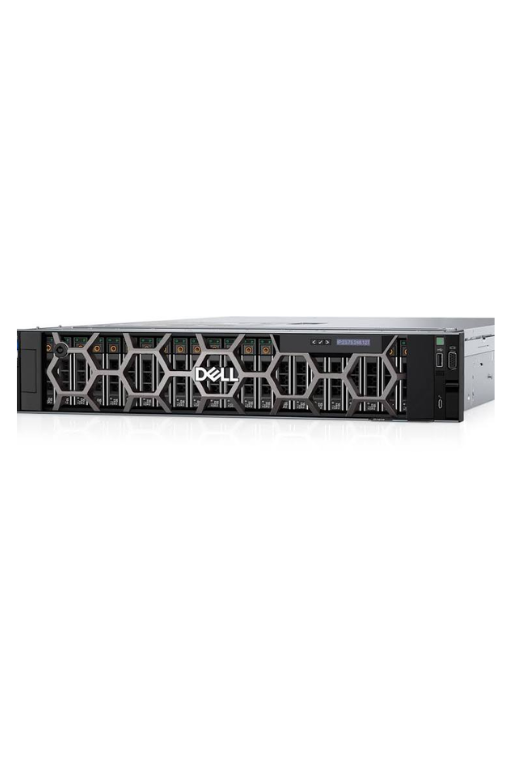
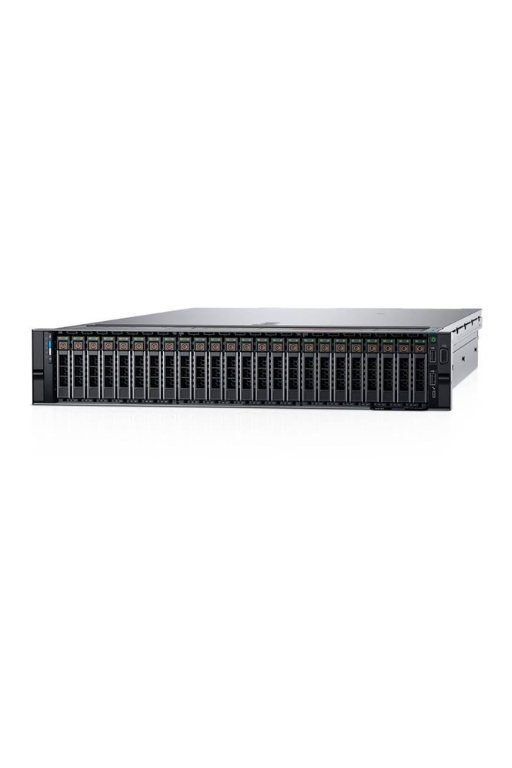
Dell-PowerEdge R840
The Dell PowerEdge R840 is a high-performance 2U four-socket enterprise rack server designed for demanding virtualization, database, analytics, high-performance computing, and mission-critical enterprise workloads. It supports up to four Intel Xeon Scalable processors, 48 DDR4 DIMM slots, large memory capacity, SAS/SATA storage, NVMe options, PCIe Gen 3 expansion, Dell PERC RAID, redundant power supplies, and iDRAC9 remote management.
Description
The Dell PowerEdge R840 is a powerful 2U, four-socket enterprise server engineered for organizations that require exceptional processing density, large memory capacity and high availability within a compact data-center footprint.
Powered by the Intel Xeon Scalable processor family, the R840 supports up to four processors, allowing organizations to build highly scalable systems for applications that require large numbers of CPU cores and extensive memory resources.
The R840 is particularly well suited for large-scale virtualization, databases, in-memory computing, business intelligence, data analytics, high-performance computing and mission-critical enterprise applications.
Key Features
- Brand: Dell
- Model: PowerEdge R840
- Form Factor: 2U Rack Server
- CPU Sockets: 4
- Processor: Intel Xeon Scalable
- Memory: DDR4 ECC RDIMM / LRDIMM
- Memory Slots: 48 × DIMM
- Maximum Memory: Up to 6TB, configuration dependent
- Storage: SAS / SATA / SSD / NVMe
- Drive Bays: Up to 24 × 2.5-inch drives, configuration dependent
- RAID: Dell PERC controllers
- Expansion: PCIe Gen 3
- GPU Support: Selected accelerator configurations
- Networking: Integrated Ethernet with OCP/PCIe adapter options
- Remote Management: iDRAC9 with Lifecycle Controller
- Security: Secure Boot, TPM 2.0 and Dell security technologies
- Power: Redundant hot-plug power supplies
- Primary Applications: Virtualization, Databases, Analytics, HPC, In-Memory Computing & Enterprise Applications
Intel Xeon Scalable Processing
The R840 supports up to four Intel Xeon Scalable processors, providing substantial multi-socket processing capability.
The four-socket design makes the server particularly suitable for workloads that scale across multiple CPUs.
Typical applications include:
- Large-scale virtualization
- Database processing
- In-memory databases
- Business intelligence
- Data analytics
- High-performance computing
- Enterprise applications
- Scientific computing
The processor configuration can be selected according to required core count, clock speed, cache and workload requirements.
High-Capacity DDR4 Memory
The R840 provides 48 DDR4 DIMM slots, allowing it to accommodate very large memory configurations.
Depending on the installed processors and memory modules, the platform can support up to 6TB of memory.
ECC memory provides enhanced reliability and data integrity for enterprise environments.
Large memory configurations are particularly valuable for:
- Virtual machine consolidation
- Large databases
- SAP HANA and other in-memory workloads
- Data analytics
- Business intelligence
- Scientific applications
Flexible Storage
The R840 supports a wide range of enterprise storage configurations.
Depending on the chassis and backplane, storage options include:
- SAS HDD
- SATA HDD
- SAS SSD
- SATA SSD
- NVMe SSD
Supported configurations can provide up to 24 × 2.5-inch drives, delivering significant storage density within the 2U chassis.
NVMe Storage
Selected R840 configurations support NVMe SSDs, providing low-latency and high-IOPS storage.
NVMe storage can be particularly beneficial for:
- Databases
- Virtualization
- Analytics
- In-memory applications
- High-performance computing
- Caching
- High-transaction workloads
The exact NVMe capability depends on the selected backplane, chassis and configuration.
Dell PERC RAID
The R840 supports Dell PowerEdge RAID Controller (PERC) options for enterprise storage management.
PERC controllers can provide:
- RAID data protection
- Drive redundancy
- Performance optimization
- Drive monitoring
- Hot-plug storage management
Supported RAID levels depend on the selected PERC controller and storage configuration.
PCIe Gen 3 Expansion
The PowerEdge R840 provides PCIe Gen 3 expansion for additional hardware.
Expansion options can include:
- Network adapters
- Fibre Channel HBAs
- Storage controllers
- GPUs
- High-speed Ethernet adapters
- Other PCIe expansion cards
This allows the R840 to be customized for specialized enterprise workloads.
GPU and Accelerator Support
Selected R840 configurations support GPUs and accelerators for compute-intensive applications.
Potential workloads include:
- Artificial intelligence
- Machine learning
- Data analytics
- Scientific computing
- High-performance computing
- Video processing
- Visualization
GPU compatibility depends on the specific chassis, risers, power supplies, cooling configuration and supported accelerator model.
High-Speed Networking
The R840 provides flexible network connectivity through integrated Ethernet and optional network adapters.
Depending on configuration, networking can be expanded to support:
- 1GbE
- 10GbE
- 25GbE
- Higher-speed Ethernet
- Fibre Channel through supported HBAs
Separate network interfaces can be dedicated to production, storage, management, backup and virtualization traffic.
iDRAC9 Remote Management
The Dell Integrated Dell Remote Access Controller 9 (iDRAC9) provides comprehensive out-of-band management.
IT administrators can remotely:
- Monitor system health
- View hardware inventory
- Configure system components
- Manage firmware
- Control server power
- Run hardware diagnostics
- Access remote console functions
- Deploy operating systems
- Manage the server lifecycle
Integration with Dell OpenManage tools enables centralized management across multiple PowerEdge systems.
Enterprise Security
The R840 includes Dell security technologies designed to help protect server hardware and firmware.
Depending on configuration, security capabilities include:
- Secure Boot
- TPM 2.0
- System Lockdown
- Cryptographically signed firmware
- Secure Erase
- Silicon Root of Trust
These features help protect against unauthorized system and firmware modifications.
Redundant Power Supplies
The R840 supports redundant hot-plug power supplies.
Redundant power configurations can help maintain system availability if a power supply fails.
Power requirements vary according to:
- Number and model of processors
- Memory capacity
- Storage configuration
- PCIe expansion cards
- GPUs
- Networking hardware
High-Density 2U Design
The R840 combines four-socket processing with a 2U rack footprint, providing significant compute and memory capacity while conserving valuable data-center rack space.
Its design is particularly useful where organizations need to maximize:
- CPU density
- Memory capacity
- Storage density
- Virtualization capacity
- Rack efficiency
Ideal Applications
Virtualization
Four-socket processing and large memory capacity make the R840 an excellent platform for large virtualization environments.
Database Servers
The combination of multiple Xeon processors, large memory capacity and high-performance storage makes the R840 suitable for demanding database environments.
In-Memory Computing
Large memory configurations support applications that require extensive datasets to remain in system memory.
Business Intelligence
The server provides substantial CPU and memory resources for complex analytics and business intelligence workloads.
High-Performance Computing
Multi-socket CPU processing provides significant computational capacity for selected HPC workloads.
Enterprise Applications
The R840 can host demanding ERP, CRM, analytics and other mission-critical applications.
Technical Specifications
| Specification | Details |
|---|---|
| Brand | Dell |
| Model | PowerEdge R840 |
| Form Factor | 2U Rack Server |
| CPU Sockets | 4 |
| Processor Family | Intel Xeon Scalable |
| Memory Slots | 48 × DDR4 DIMM |
| Maximum Memory | Up to 6TB, configuration dependent |
| Memory Type | DDR4 ECC RDIMM/LRDIMM |
| Storage | SAS / SATA / SSD / NVMe |
| Drive Bays | Up to 24 × 2.5″ in supported configurations |
| RAID | Dell PERC |
| Expansion | PCIe Gen 3 |
| GPU Support | Selected configurations |
| Networking | Ethernet / OCP / PCIe options |
| Remote Management | iDRAC9 |
| Security | Secure Boot / TPM 2.0 / Dell security technologies |
| Power | Redundant hot-plug PSU |
| Rack Height | 2U |
| Primary Applications | Virtualization, Databases, Analytics, HPC & Enterprise Applications |
Note: Exact processor models, memory capacity, storage drive count, NVMe configuration, PERC controller, PCIe cards, GPU support and PSU capacity depend on the specific R840 configuration.
Key Benefits
Four-Socket Architecture: Supports up to four Intel Xeon Scalable processors for highly scalable enterprise workloads.
Large Memory Capacity: Up to 48 DDR4 DIMMs and configurations supporting up to 6TB of memory.
High Storage Density: Supports up to 24 × 2.5-inch drives in supported configurations.
NVMe Ready: Selected configurations provide high-performance NVMe storage.
Enterprise RAID: Dell PERC controllers provide storage protection and management.
GPU Support: Selected configurations can accommodate accelerators for analytics and compute-intensive workloads.
Advanced Management: iDRAC9 enables remote monitoring, diagnostics, configuration and lifecycle management.
Redundant Power: Hot-plug redundant power supplies support high-availability deployments.
Compact 2U Design: Delivers substantial four-socket compute and memory capacity within a space-efficient rack footprint.
Product Summary
The Dell PowerEdge R840 is a high-density 2U four-socket enterprise rack server designed for organizations requiring exceptional processing power, memory capacity and scalability.
With support for up to four Intel Xeon Scalable processors, 48 DDR4 ECC DIMM slots, up to 6TB memory, SAS/SATA/SSD/NVMe storage, Dell PERC RAID, PCIe Gen 3 expansion, selected GPU configurations, high-speed networking, redundant hot-plug power supplies and iDRAC9 management, the R840 provides a powerful platform for virtualization, databases, in-memory computing, business intelligence, analytics, high-performance computing and mission-critical enterprise applications.
Related products
-

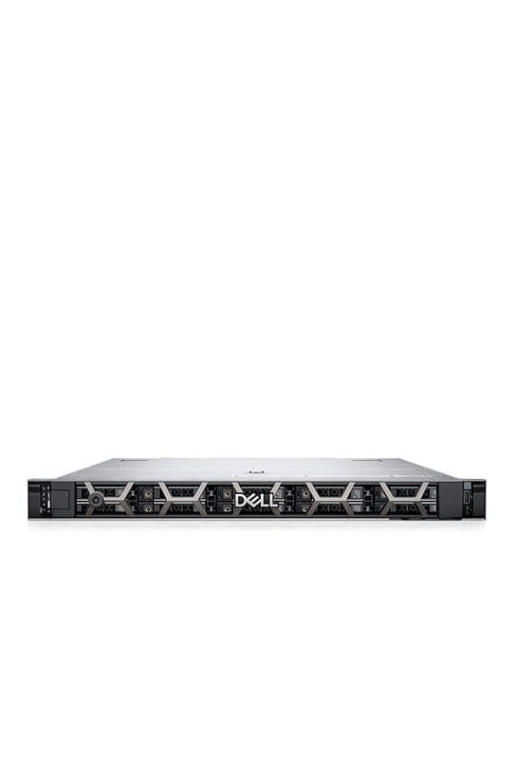
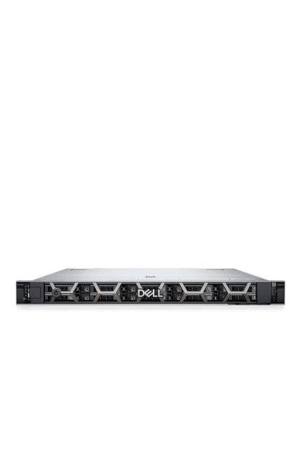
Dell PowerEdge R6625
Read more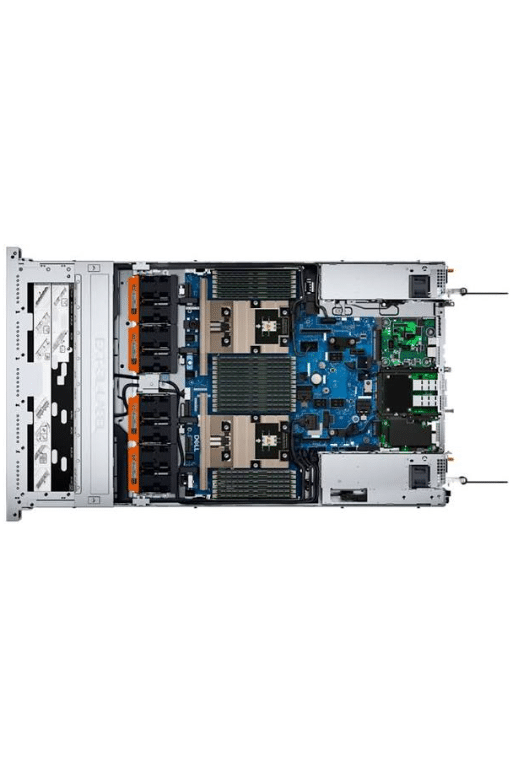
The Dell PowerEdge R6625 is a high-density 1U dual-socket enterprise rack server powered by AMD EPYC 4th Generation 9004 Series processors. Designed for demanding workloads such as high-performance computing (HPC), virtualization, VDI, databases, data warehouses, eCommerce, and data-intensive applications, the R6625 combines high core density, DDR5 memory, PCIe Gen 5 connectivity, flexible SAS/SATA/NVMe storage, optional GPU acceleration, and advanced Dell management technologies.
Quick View -

Dell EMC PowerEdge R440 1U Rack Server
Read more
The Dell EMC PowerEdge R440 is a high-density 1U dual-socket rack server designed for high-performance computing, web hosting, scale-out infrastructure, virtualization, and demanding business applications. It supports up to two Intel Xeon Scalable processors, up to 1TB DDR4 memory, flexible storage configurations with up to 10 × 2.5-inch drives and up to 4 NVMe SSDs, PERC RAID controllers, PCIe Gen 3 expansion, and iDRAC9 with Lifecycle Controller for comprehensive remote management.
Quick View -


Dell PowerEdge R6525
Read more
The Dell PowerEdge R6525 is a high-performance 1U dual-socket enterprise rack server powered by AMD EPYC 7002/7003 Series processors. Designed for demanding workloads including virtualization, high-performance computing, software-defined storage, databases, VDI, and high-density enterprise applications, the R6525 combines high core density, up to 4TB DDR4 memory, PCIe Gen 4 expansion, flexible SAS/SATA/NVMe storage, advanced RAID options, and iDRAC9 management in a compact 1U chassis.
Quick View -

Dell PowerEdge R250 1U Rack Server
Read more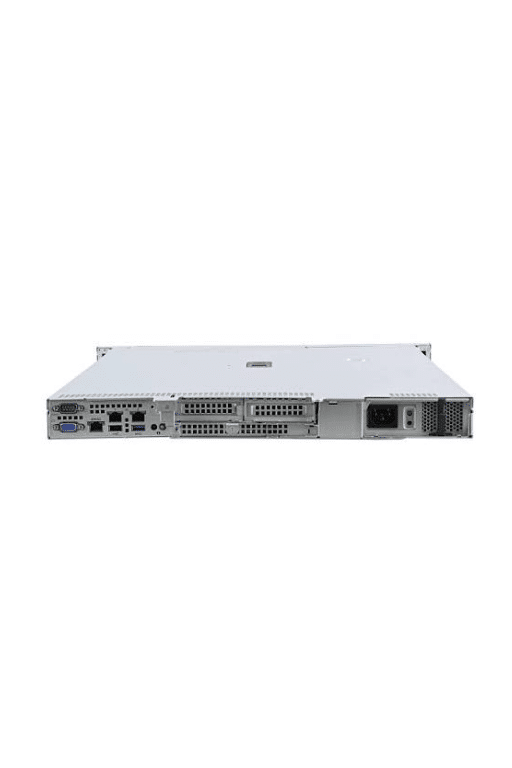
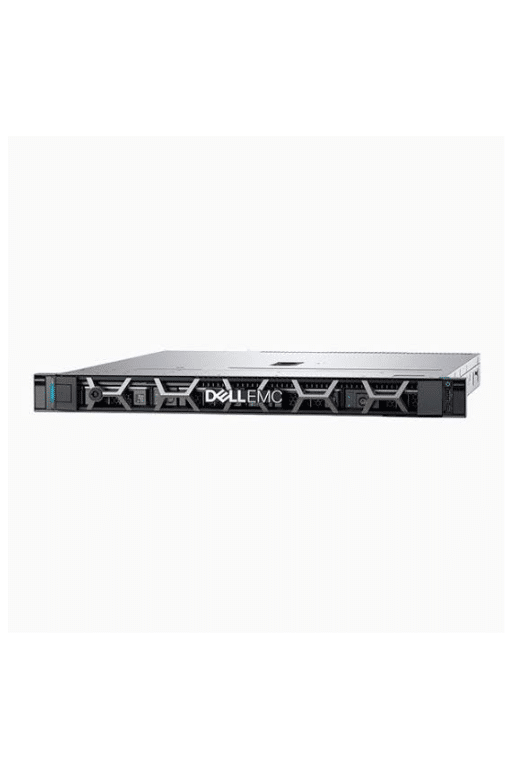
Dell PowerEdge R250 is a compact 1U single-socket rack server designed for small and medium-sized businesses, branch offices, web hosting, file services, and general business applications. It supports an Intel Xeon E-2300 series processor with up to 8 cores, up to 128GB DDR4 ECC UDIMM memory, up to four 3.5-inch drives, dual 1GbE networking, PCIe Gen 4 expansion, and iDRAC9 remote management.
Quick View
